FREE GUIDE
The Technical SaaS AISO Guide: How to Optimize Your Website’s Infrastructure for AI Crawlers
A practical guide for SaaS teams to fine-tune website infrastructure, ensuring AI crawlers can access, understand, and rank content effectively.
Summary
Imagine this: your SaaS website is fully optimized for Google SEO, fast, clean, and loaded with keyword-rich content. But when your prospects search, the answers come straight from ChatGPT, Gemini, or Google’s AI Overviews.
Your site? Hardly a click in sight. That’s the new search reality.
- 40% Searches now end without a visit to a website, and AI-driven answer engines are only accelerating this shift.
Traditional SEO still matters, but it’s no longer enough for SaaS SEO companies that want to stay visible.
Enter AI Search Optimization (AISO). Unlike SEO, which fights for rankings, AISO ensures your content is understood, retrievable, and cited by AI systems shaping tomorrow’s buyer journeys. This guide will show you how to optimize your website infrastructure for AI crawlers.
What Is AISO and Why Does It Matter for SaaS?
AISO (AI Search Optimization) is the process of optimizing your SaaS website so AI crawlers, large language models, and answer engines can understand your content. It also ensures they can retrieve and cite your content accurately in AI-generated results.
Traditional SEO is more focused on keyword rankings in search engines. AISO, on the other hand, is about building semantic clarity, technical structure, and authoritative signals that make your SaaS content valuable to AI-driven platforms like ChatGPT, Gemini, and Google’s AI Overviews.
In an AI SEO world, optimizing for AISO is about visibility, and it’s about staying ahead of your competitors. As more prospects turn to AI systems for answers, b2b SaaS companies that prioritize AISO gain a significant edge, ensuring their content is chosen, referenced, and trusted by these systems.
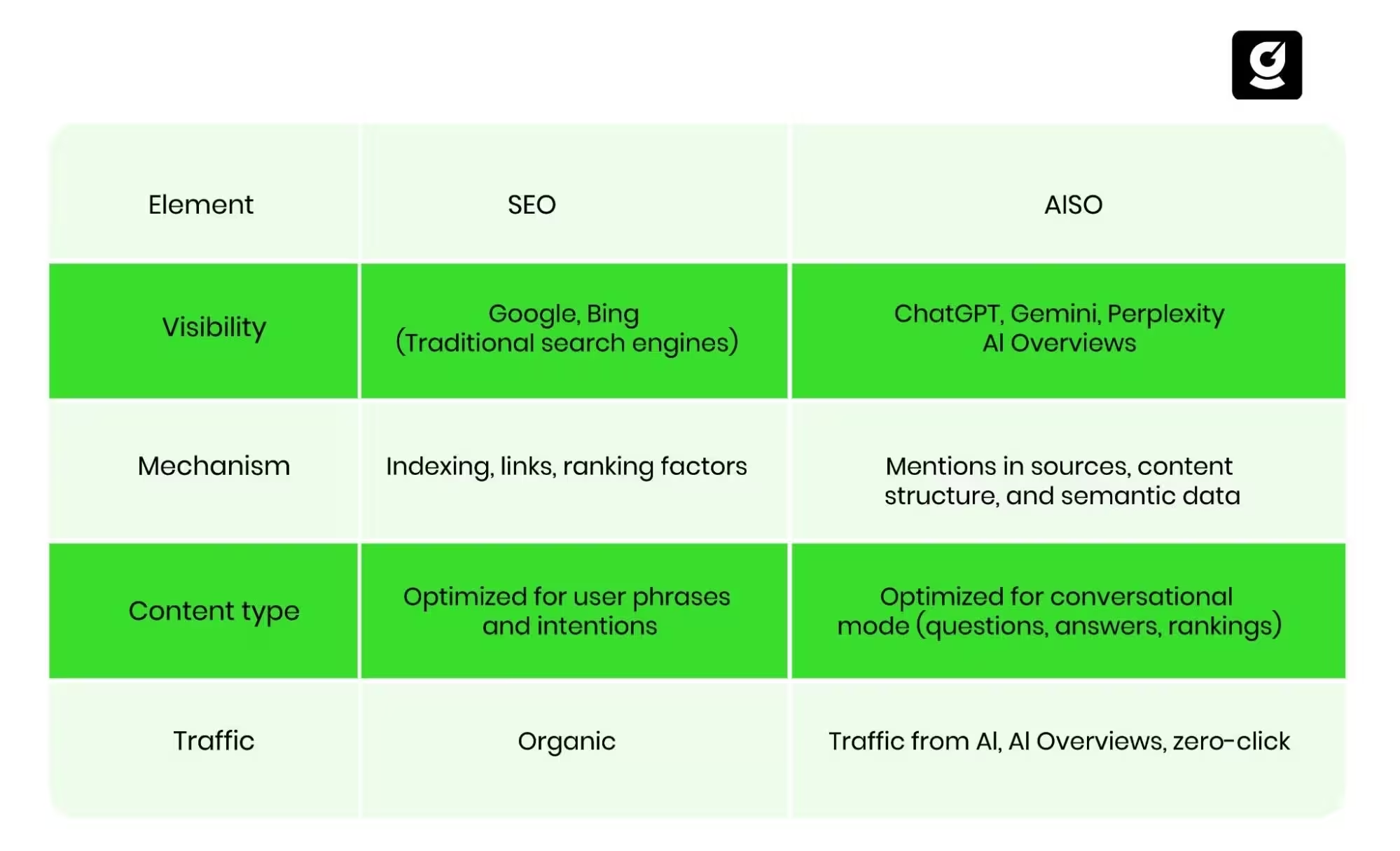
How AISO Differs From Traditional SEO
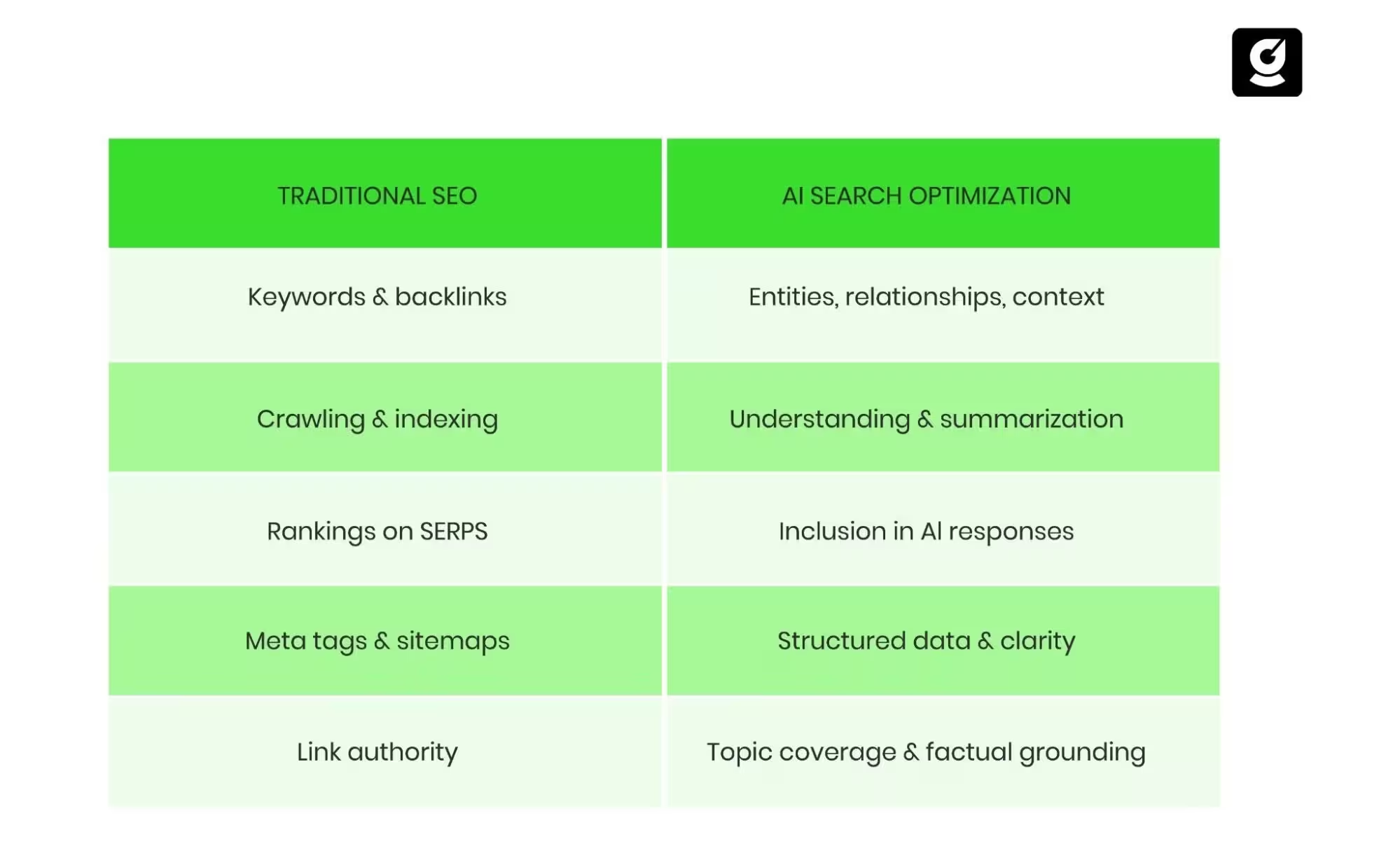
- SEO = Ranking → Optimizing for Google’s algorithms to appear on page one.
- AISO = Referencing → Optimizing so AI systems select and cite your content directly in answers.
Why AISO Is Critical for SaaS
- Zero-Click Growth: With 58% of searches ending without a click, SaaS brands risk losing discoverability if they rely only on traditional SEO.
- AI as First Touchpoint: Prospects increasingly start with ChatGPT or Gemini when researching tools (“What’s the best CRM for B2B SaaS agency?”). If your content isn’t optimized for AI, your competitors will be.
- Complex SaaS Decisions: Buyers ask nuanced, multi-step questions. AI favors structured, semantically rich answers, meaning SaaS companies that provide context and clarity win visibility.
- Future-Proofing: As AI adoption grows, AISO ensures your SaaS website remains discoverable even when search engines shift toward AI-first models.
Example in Action
- Traditional SEO Result: A SaaS blog post ranks #3 on Google for “best saas seo services.”
- AISO Result: ChatGPT cites your SaaS brand directly in its generated list of “best saas seo services for startup and tech companies,” giving you visibility even if the user never clicks Google.
How Do AI Crawlers Work on SaaS Websites?
AI crawlers work by scanning your SaaS website not just for keywords, but for semantic meaning, structured data, and contextual authority so they can accurately reference your content in AI-generated answers.
- Entity Recognition Over Keywords
- Traditional crawlers focus on keyword matching.
- AI crawlers map entities (e.g., “B2B SaaS CRM”) and relationships between them.
- This means your SaaS site must clearly define products, features, and use cases using structured markup and consistent terminology.
- Semantic Understanding
- AI crawlers evaluate context instead of exact keyword density.
- Example: A page about “SaaS onboarding software” should also mention related entities like “user activation,” “customer journey,” and “product adoption metrics.”
- Structured Data Parsing
- AI bots heavily rely on schema markup (FAQ, How-To, Product schema).
- Without structured data, your SaaS site risks being overlooked by AI systems trying to extract concise, reliable answers.
- Authority & Trust Signals
- AI systems are trained to cite authoritative sources.
- They look for backlinks, consistent brand mentions, and E-E-A-T signals (Experience, Expertise, Authoritativeness, Trustworthiness).
Why This Matters for SaaS
- Complex Buyer Queries: SaaS buyers ask layered questions like “Which SaaS onboarding tools integrate with HubSpot and support enterprise-scale?” AI crawlers need structured, detailed content to extract accurate answers.
- API & Documentation Pages: Many SaaS products rely on technical docs. If not properly structured, even product marketing agencies may find these pages invisible to AI crawlers.
- Multi-Channel AI Discovery: Optimized content can surface in ChatGPT recommendations, Perplexity search, Google’s AI Overviews, and even voice assistants like Alexa or Siri.
SaaS AISO Tip:
If you want AI crawlers to understand your SaaS site, think of entities, not just keywords. Structure content around semantic clusters (features → benefits → integrations → use cases), and support them with schema markup + internal linking.
What Are the Key Technical Elements of SaaS Website Optimization for AISO?
| Technical Element | Why It Matters for AISO | Example for SaaS |
|---|---|---|
| Site Speed & Core Web Vitals | Improves UX and prioritization by AI crawlers | A pricing page that loads in <2s, showing plans instantly without a layout shift |
| Clean Crawl Architecture | Ensures SaaS docs/integrations are visible | features/crm, /features/automation, /features/analytics → instead of one long “features” page |
| Schema Markup | Adds semantic clarity and increases citation chances | Adding FAQ schema to the “Integrations with Slack” page so Gemini can quote answers directly |
| Mobile-First & Accessibility | AI crawlers parse the mobile version first | A signup page that’s fully responsive with ARIA labels, so AI understands form fields |
| AI-Friendly Sitemaps | Helps AI retrieve precise, relevant answers | A dedicated sitemap for docs (/sitemap-docs.xml), separating API endpoints from tutorials |
| Passage-Level Structuring | AI retrieves sections, not whole pages. Direct answers & Q&A blocks boost AI inclusion. | API docs broken into H2 questions: “How do I generate an API key?” → one-sentence answer. |
1. Site Speed & Core Web Vitals: The First Impression for AI Systems
AI crawlers, like human users, prioritize performance. A slow SaaS site doesn’t just frustrate visitors; it reduces the likelihood that AI systems will reference your content in their outputs.
- Google research shows that pages taking longer than 3 seconds to load see a 53% higher bounce rate.
- Core Web Vitals—Largest Contentful Paint (LCP), Interaction to Next Paint (INP), and Cumulative Layout Shift (CLS)—are now non-negotiables for AISO.
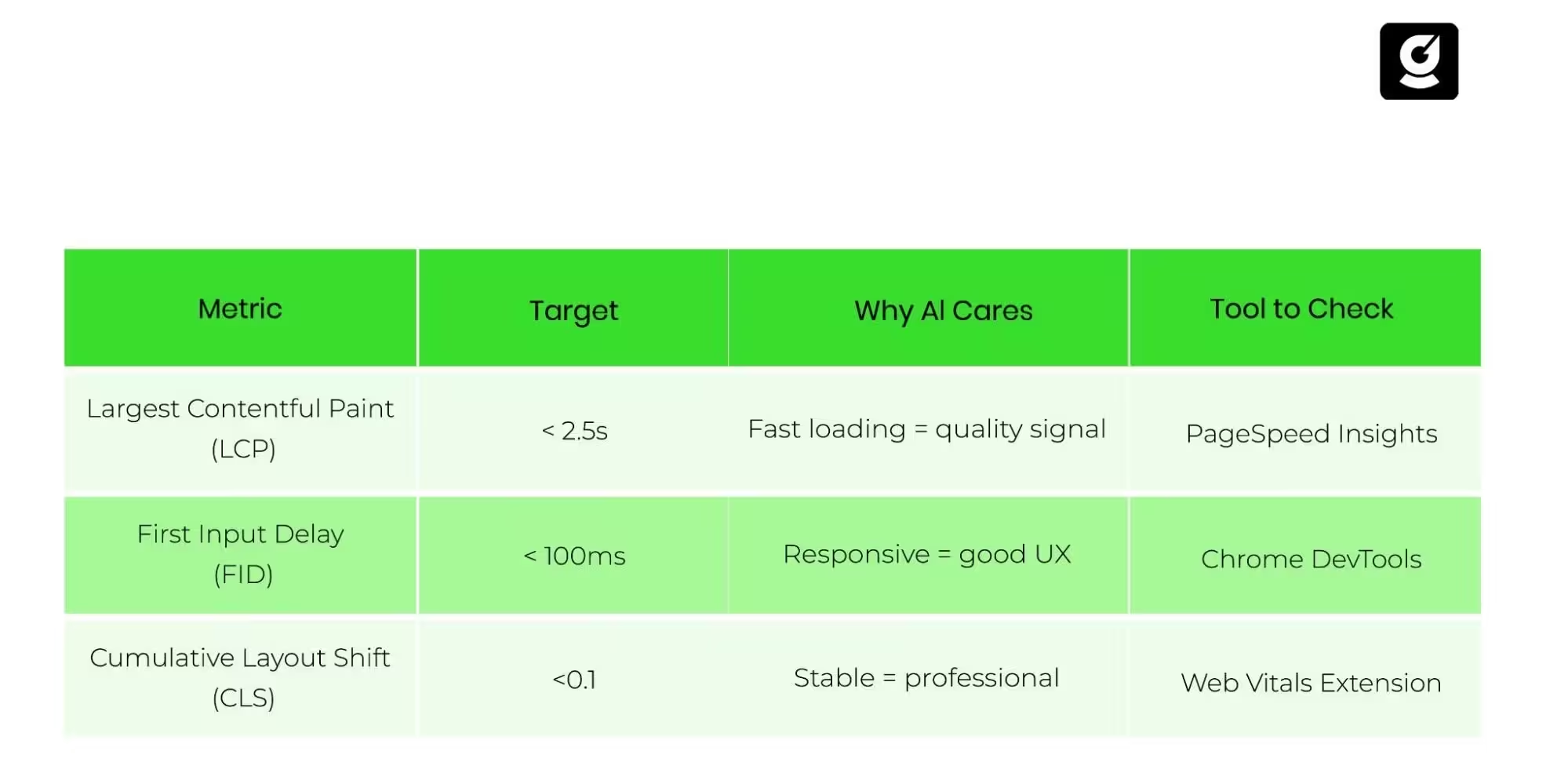
- For SaaS companies that serve a global user base, a distributed CDN ensures latency doesn’t affect how AI crawlers experience your content.
2. Crawl-Friendly Architecture: Making SaaS Content AI-Readable
AI crawlers build a semantic map of your site, and in SaaS sites, often built with Single Page Applications (SPAs) or complex dashboards, risk being invisible if not properly structured.
- Server-Side Rendering (SSR) or Static Rendering ensures that content-heavy SaaS pages, including documentation, integrations, or your SaaS landing page, are fully indexable.
- Logical URL structures (example.com/integrations/slack) make entities easier to identify and cluster.
- AI-focused sitemaps should go beyond XML and consider segmenting for FAQs, docs, pricing, and blog content.
Avoid burying high-value content (docs, onboarding guides) behind authentication walls unless necessary. If gated, provide AI-readable summaries or schema-rich previews to ensure your SEO focused content for SaaS reaches both users and search engines.
3. Structured Data & Schema Markup: Giving AI Semantic Clarity
Traditional SEO used keywords, but AISO uses entities and relationships, and schema is the roadmap.
- FAQ Schema → Increases chances of being directly cited in AI answers.
- How-To Schema → Perfect for onboarding guides and step-by-step SaaS tutorials.
- Product/Software Application Schema → Crucial for SaaS platforms with multiple tools/features.
- Breadcrumbs & Sitelinks Schema → Helps AI systems understand site hierarchy.
4. Mobile-First & Accessibility: AI Reads the Mobile Version First
AI crawlers often evaluate the mobile-rendered experience before the desktop. If your SaaS site isn’t mobile-optimized, you risk being deprioritized in both search engines and AI answer engines.
- Responsive layouts ensure clarity across devices.
- Alt text, ARIA labels, and semantic HTML boost accessibility and machine readability.
- AI systems thrive on clarity; accessibility improvements directly support retrievability.
5. AI-Friendly Sitemaps & Retrieval-Augmented Structuring
AI crawlers retrieve specific passages to generate answers. That’s why segmented, structured content is crucial.
- AI-Optimized Sitemaps → Segment by FAQs, blog posts, docs, use cases, and integrations.
- Passage-level clarity → Use clear H2/H3 questions with direct answers (like this guide).
- RAG-Friendly Content → Break long-form content into labeled, retrievable sections for AI.
Example: Instead of a single “Integrations” page, create dedicated, schema-enabled subpages:
- /integrations/slack
- /integrations/salesforce
- /integrations/hubspot
This makes it easier for AI systems to extract and reference specific answers.
6. Passage-Level Structuring – The Secret to AI Answer Inclusion
Passage-level structuring means organizing your SaaS website content into clear, concise sections. This is where each heading provides a direct, one-sentence answer, followed by supporting details, making it easier for AI crawlers to extract and cite your content.
- AI Pulls Snippets, Not Pages – Large language models like ChatGPT don’t summarize entire articles; they quote passages.
- Featured Snippets & Voice Search – Both rely on well-structured, direct-answer paragraphs.
- Complex SaaS Queries – Buyers often ask multi-step questions (“Does this integrate with HubSpot, and what’s the cost for enterprise users?”). Structured passages help AI give precise answers while still pointing back to your site.
How to Apply Passage Structuring
-
- Direct Answer First, so begin every section with a short, crisp statement.
- Break Content Into Q&A Blocks and use H2/H3 headings phrased as questions.
- After the answer, add details like screenshots, comparisons, or step-by-step guides.
- Use Semantic Linking, you can link related passages (e.g., “pricing for integrations” → “enterprise plan details”).
What Results Can You Expect from Optimizing Your SaaS Website for AISO?
When you align your SaaS website with AI Search Optimization (AISO), the impact goes far beyond rankings. Here’s what you can realistically expect:
More Inclusion in AI Answers
Your product guides, FAQs, and integration pages have a higher chance of being quoted directly in AI-generated summaries and voice search results.
Better Quality of Organic Traffic
Instead of chasing volume, you attract users who land on your site through very specific, intent-driven queries that AI systems surface — people actively looking for SaaS solutions like yours.
Improved Conversions with Clearer CTAs
AISO pushes you to structure content in direct, answer-first formats. That clarity reduces friction, guiding visitors toward free trials, demos, or pricing pages more effectively.
Enhanced User Experience and Accessibility
The same optimizations that help AI understand your content — semantic markup, fast loading times, responsive design — also create smoother, more inclusive user experiences.
Future-Proof Search Visibility
Search behavior is shifting fast toward AI-powered discovery. AISO ensures your SaaS brand remains visible and relevant as traditional SEO signals give way to semantic and AI-driven models.
Conclusion
Optimizing your SaaS website for AISO is about preparing your infrastructure for how AI systems already evaluate, retrieve, and present content.
AI crawlers like Google’s AI Overviews, OpenAI’s ChatGPT, and Gemini aren’t scanning your site the way traditional search engines used to. They’re looking for speed, clarity, structure, and semantic precision.
That’s why many SaaS website design agencies emphasize clean, well-structured layouts. A slow, cluttered, or poorly organized site will frustrate users and make your content invisible to AI-powered search and recommendation engines.
If you’re ready to put this into action, growth.cx, a leading SaaS marketing agency, can help you implement AI SEO (AISO) strategies tailored for SaaS. With the proper technical optimization, you’ll position your website to be the first answer AI delivers, not just another result buried online.
Be the SaaS Brand AI Can’t Ignore
growth.cx helps SaaS companies win visibility in AI-driven search with tailored AI SEO strategies.