FREE GUIDE
The Definitive Guide to B2B SaaS Content Distribution: How to Get Your Content Seen by the Right People
This guide shows how to distribute B2B SaaS content so it’s seen by the right people and makes a real difference for your business.
Summary
You’ve probably heard the saying: "If you build it, they will come." But in the world of B2B SaaS, it’s not enough to just create great content and hope your audience finds it.
Here’s the real question: If you’re creating content but no one is seeing it, is it making an impact?
Effective content distribution is the bridge between your great content and your target audience. In the competitive B2B SaaS market, reaching the right people at the right time is crucial. Without a well-thought-out distribution strategy, your content might go unnoticed, regardless of how valuable it is.
By properly distributing your content, you ensure it gets in front of the decision-makers, influencers, and customers who can benefit from it.
In the following sections, we’ll dive into actionable strategies to ensure your content gets the visibility it deserves and contributes to your business growth.
What is B2B SaaS Content Distribution
Content distribution means sharing and promoting your content across different channels and formats. This includes blogs, whitepapers, videos, case studies, and other resources designed to educate, engage, and convert potential customers. It’s about creating high-quality SEO-focused SaaS content and ensuring it reaches the right people at the right time.
Why is Content Distribution Crucial for SaaS Businesses?
- Increases Content Reach: Without distribution, your content is limited to your website visitors or followers. Proper distribution ensures it reaches a wider audience, including decision-makers and potential leads.
- Builds Brand Awareness: Effective content distribution increases visibility, helping potential customers become familiar with your brand.
- Drives Traffic and Conversions: Content shared across multiple channels attracts more visitors to your website and increases the chances of converting them into customers.
How Can You Identify the Right Audience for Your B2B SaaS Content?
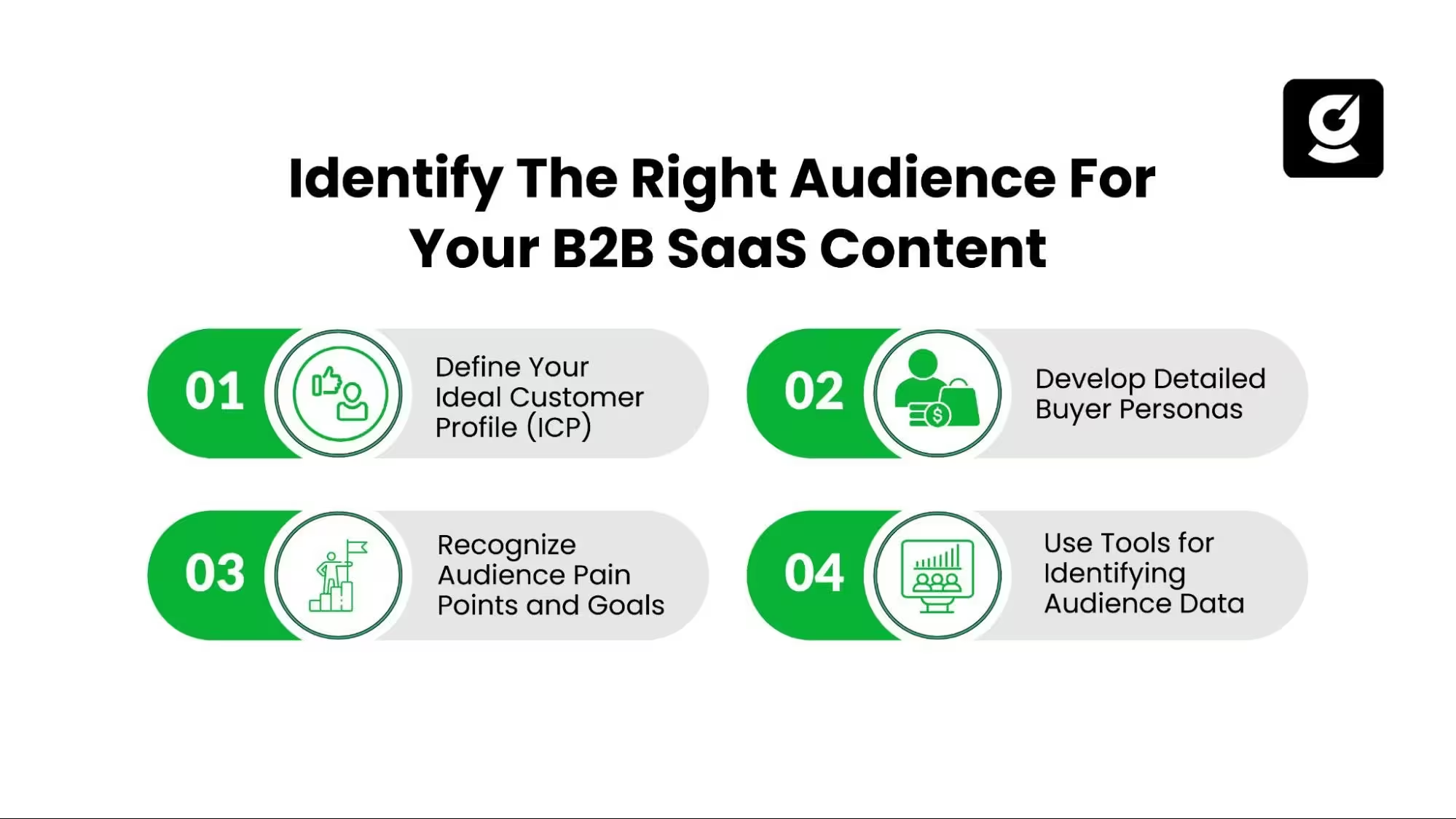
Identifying the right audience for your B2B SaaS content is a critical first step in ensuring its success. Without understanding who your content is for, even the best content won’t reach its potential.
- Define Your Ideal Customer Profile (ICP): Your ICP is a detailed description of the type of company that would benefit most from your SaaS solution. This includes factors like company size, industry, revenue, geographic location, and technology stack. Understanding your ICP helps you focus on businesses that are most likely to convert.
- Develop Detailed Buyer Personas: Buyer personas are semi-fictional characters that represent your ideal customers. These personas are based on data and insights about your real customers, including their job roles, challenges, goals, and purchasing behaviors. Knowing your buyer personas allows you to create content that resonates with the specific needs of each group.
- Recognize Audience Pain Points and Goals: Every buyer has a set of pain points they’re looking to solve and goals they want to achieve. By understanding these, you can craft content that speaks directly to their needs, helping them see how your SaaS solution can make their work easier or more efficient.
- Use Tools for Identifying Audience Data: Leverage tools like CRM systems, web analytics, social media insights, and survey data to gather detailed information about your audience. These tools provide valuable data that helps you refine your audience segmentation and content marketing strategy.
What Role Does Audience Research Play in Content Distribution?
- Importance of Audience Research:Audience research helps ensure your content reaches the right people with the right message. By understanding your audience’s preferences, challenges, and behaviors, you can create highly relevant content that will engage them. This, in turn, improves the chances of your content being shared, consumed, and acted upon.
- Segment Your Audience Effectively: Not all of your audience will have the same needs or concerns. Segmenting your audience based on criteria like industry, company size, and job role allows you to create personalized content for each group. This enables more effective distribution and higher conversion rates.
What Are the Most Effective B2B SaaS Content Distribution Channels?
Effective content distribution is essential for making sure your B2B SaaS content reaches the right people and drives real B2B SaaS content marketing conversion.
Here’s a breakdown of the most effective channels to consider for distributing your content.
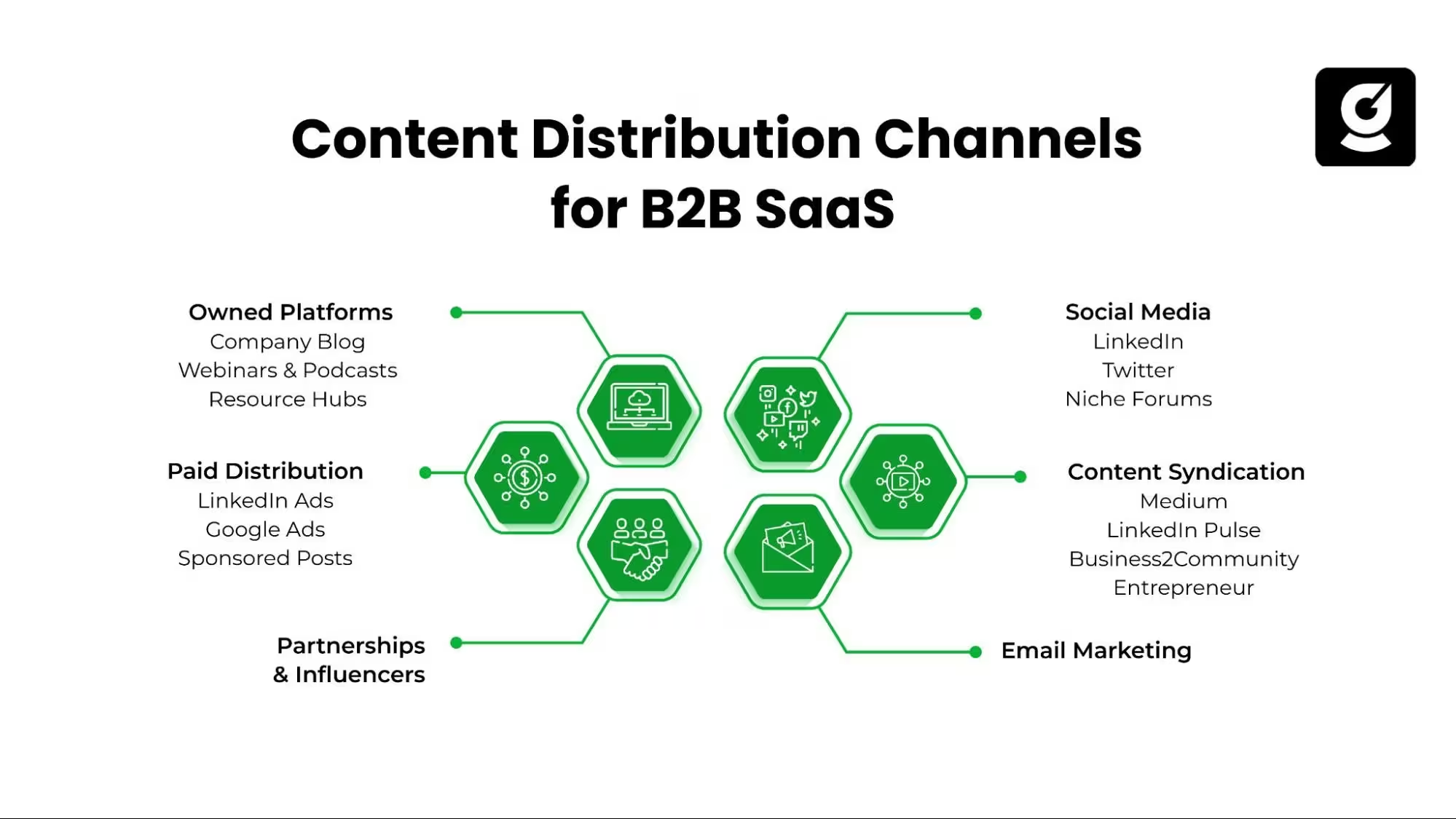
1. Social Media: How Can You Leverage LinkedIn, Twitter, and Other Platforms?
Social media has become a powerful tool for B2B SaaS companies to connect with potential customers, industry influencers, and decision-makers.
Here's how you can make the most of it:
-
Importance of Social Media for B2B SaaS Distribution
Social media platforms allow you to directly engage with your audience in real time. A social media marketing agency can help B2B SaaS companies use these platforms to build relationships, share insights, and engage with their community.
Platforms like LinkedIn and Twitter are particularly valuable for reaching professional audiences and starting conversations that lead to conversions.
- Best Practices for Posting and Engaging on LinkedIn, Twitter, and Niche Industry Forums
- LinkedIn: Share long-form articles, case studies, and industry insights. Use LinkedIn’s publishing platform to post content directly on your profile and engage in discussions in relevant groups.
- Twitter: Keep your tweets concise but impactful. Share quick tips, stats, and blog links while engaging with hashtags and industry leaders to boost visibility.
- Niche Industry Forums: Participate in discussions on platforms like Reddit or specialized SaaS forums. Share valuable content that addresses users’ pain points while positioning your SaaS solution as the answer.
- Best Practices for Posting and Engaging on LinkedIn, Twitter, and Niche Industry Forums
2. Content Syndication: What Are the Best Syndication Networks for SaaS?
Content syndication is an effective way to expand the reach of your content, bringing it to new audiences that may not have discovered you yet.
-
Benefits of Content Syndication
Syndicating content allows you to reach a broader audience by leveraging third-party platforms to publish your content. This helps increase visibility, drive traffic back to your website, and build brand credibility with new leads.
- Top Syndication Networks for SaaS Businesses
- Medium: Medium has a much larger audience of readers interested in a wide range of topics, including SaaS. Publishing on Medium can drive substantial traffic to your website.
- LinkedIn Pulse: LinkedIn Pulse is another great platform for syndicating your content. It’s especially beneficial for B2B SaaS businesses targeting professional audiences.
- Business 2 Community & Entrepreneur: These syndication networks are ideal for reaching B2B professionals and business leaders who are actively seeking relevant insights.
- Medium: Medium has a much larger audience of readers interested in a wide range of topics, including SaaS. Publishing on Medium can drive substantial traffic to your website.
- Top Syndication Networks for SaaS Businesses
3. Email Marketing: How Can You Maximize Your Reach with Email?
Email marketing remains one of the most effective ways to distribute content and engage with your audience.
-
Benefits of Email Distribution for SaaS Content
Email allows you to deliver content directly to your audience’s inbox, which means it’s more likely to be seen. It’s also one of the most personalized forms of communication. Emails can be tailored to specific audience segments, increasing the chances of engagement.
- Tips for Creating Compelling Email Campaigns:
- Personalization: Use subscriber data to personalize email content. Address recipients by name and tailor the content based on their interests or past behavior.
- Segmentation: Segment your email list based on factors like job role, company size, or purchase stage to send highly relevant content.
- A/B Testing: Experiment with subject lines, content, and calls to action (CTAs) to optimize your email performance and improve open and click-through rates.
- Tips for Creating Compelling Email Campaigns:
4. Partnerships & Influencers: How Can Strategic Partnerships Help in Content Distribution?
Collaborating with industry influencers or partners can amplify your content distribution efforts and help you tap into their established networks.
-
Partnerships with Influencers, Bloggers, or Other SaaS Platforms:
Building partnerships with influencers or well-known bloggers in your industry can help you reach a new and relevant audience. These influencers can share your content on their platforms, increasing your content’s reach and credibility.
-
Collaborating with Industry Leaders to Share Content Across Networks:
Consider guest blogging, co-hosting webinars, or co-authoring whitepapers with industry leaders. These types of collaborations not only help get your content seen by a broader audience but also position your brand as an authority in the space.
5. Paid Distribution: How Can You Extend Your Reach with Paid Channels?
Paid distribution helps you put your content in front of people who may not find it through organic efforts. For B2B SaaS, it works well when promoting research reports, case studies, or webinars to a specific set of professionals.
With paid channels, you can target by job role, company size, industry, or geography. This makes sure your content is reaching the right audience, not just a broad mix of users.
Common Paid Channels for B2B SaaS
- LinkedIn Ads: Effective for reaching professionals by role and company type.
- Google Ads: Helps capture intent-driven searches from prospects looking for solutions.
- Sponsored Posts: On platforms like Twitter or niche industry sites, sponsored posts give your content visibility in relevant feeds.
6. Owned Platforms: How Can You Use What You Already Control?
Owned platforms are the channels your company manages directly, giving you full control over how and when your content is shared. For SaaS businesses, these platforms often act as the base for building trust and engaging with customers.
Since you control the platform, you don’t rely on outside algorithms or changing rules. This makes them a steady way to keep your content visible and accessible to your audience.
Examples of Owned Distribution Channels for SaaS
- Company Blog: A hub for thought leadership, product education, and SEO-driven articles
- Webinars & Podcasts: Formats that create deeper connections with prospects and customers.
- Resource Hubs: Collections of guides, case studies, and playbooks that your audience can return to over time.
Incorporating a variety of distribution channels into your strategy will help maximize the reach of your content.
How Can You Optimize Your Content for Better Visibility Across Multiple Channels?
Whether you're distributing content on social media, email, or syndicating on third-party platforms, optimizing for SEO, AEO, and geo-targeting can make a significant difference in how your content gets discovered.
Below, we explore how you can improve your content’s visibility across various channels.
What Role Do Keywords and SEO Play in Content Distribution?
Keywords and SEO are crucial for making sure your content gets seen. Without proper optimization, even the best content can go unnoticed.
-
Keyword Research and On-Page SEO for SaaS Content:
Keyword research is key to identifying what your audience is searching for. On-page SEO helps optimize your titles, meta descriptions, headers, and URL structure, making it easier for search engines to index and rank your content.
-
Using LSI and Long-Tail Keywords:
LSI keywords help search engines understand content context, while long-tail keywords target more specific, lower-competition search terms.
-
Optimizing for AI-Powered Search Engines:
Focus on structuring your content to directly answer questions and ensure it’s easily digestible for AI-driven search engines.
Strategy Action Keyword Research Identify popular search terms related to your product or service. On-Page SEO Optimize titles, meta descriptions, headers, and URLs for better ranking. LSI Keywords Use related keywords to add context and improve search engine relevance. Long-Tail Keywords Focus on specific, lower-competition phrases that better match niche audiences. AI Optimization Structure content for AI search engines, using concise answers, lists, and clear formats.
Can You Improve Your Content for AEO (Answer Engine Optimization)?
AEO is about optimizing your content for answer engines like Featured Snippets, which can drive more traffic to your site.
- What is AEO and Why It's Important for SaaS Content?AEO helps your content appear in answer boxes or "People Also Ask" sections, building authority and driving organic traffic.
- Optimizing for Answer Engines:Focus on providing clear, direct answers within the content. Use bullet points and well-structured text to make it easier for search engines to pull relevant information.
AEO Strategy Action Clear Answers Provide direct answers to common questions, especially in the first few lines. Content Structure Use bullet points, lists, and concise paragraphs to improve readability. Natural Language Optimize for conversational queries that users are likely to search for. 
How to Use Geo-Targeting to Distribute Content in Specific Locations?
Geo-targeting allows you to customize your content for different locations, improving relevance and increasing engagement.
- Significance of Geo SEO (GEO) and Localizing Content:Geo SEO makes your content more relevant to local audiences by focusing on regional search queries. It helps you address location-specific challenges and solutions, increasing your chances of ranking locally.
- Targeting Specific Countries or Regions with Personalized SaaS Content:Use localized keywords, adapt your messaging to fit regional preferences, and highlight success stories from specific locations to make your content more relevant.
Location-Specific Action Example for SaaS Localized Keywords Use terms like “tax compliance in the UK” or “GDPR SaaS solutions in Europe.” Cultural Relevance Address local regulatory issues, cultural preferences, and market demands. Localized Case Studies Share success stories from clients in the region you are targeting.
How Can You Repurpose Content for Maximum Distribution?
Repurposing your content involves transforming it into various formats that appeal to different segments of your audience and are suited to different platforms.
Some popular ways to repurpose your SaaS content include:
- Blog Posts into InfographicsInfographics are an effective way to present complex data in a visually engaging manner. Repurpose data-heavy SaaS blog posts, case studies, or industry reports into easy-to-read infographics that can be shared on social media or included in emails. They are great for catching attention and summarizing information quickly.
- Blog Posts into PodcastsIf you have in-depth blog posts, repurpose them into podcasts or audio formats for people who prefer listening to content. This allows you to reach an audience that may be on the go or prefers audio over written content. You can even invite guest speakers or experts to discuss the topics from your blog to add variety.
- Blog Posts into VideosVideos are one of the most engaging forms of content. Repurpose your blog posts into explainer videos or how-to guides. Platforms like YouTube, LinkedIn, and Instagram are perfect for sharing video content, and they tend to generate higher engagement rates than text-based posts.
- Webinars or Workshops into Blog Posts or WhitepapersIf you conduct webinars or live workshops, turn those sessions into detailed blog posts, whitepapers, or case studies. This helps you leverage the content from the live event and extend its value for those who couldn’t attend.
- E-books or Case Studies into Social Media PostsBreak down the key insights or sections from your long-form content, like e-books or case studies, into bite-sized posts for social media. This allows you to maintain engagement with your followers over time and drive them back to your b2b saas website for more in-depth resources.
Conclusion
Content creation is only half the battle distribution is where your efforts turn into real impact.
For B2B SaaS companies, visibility isn’t about being everywhere, it’s about being in the right places where decision-makers are paying attention.
Partnering with growth.cx, a leading SaaS marketing agency, can help you combine organic, paid, and partnership-driven distribution with smart optimization so your content breaks past the noise and resonates with the audiences that matter most. Treat distribution as an ongoing strategy, not a one-off campaign, and you’ll not only amplify your reach but also strengthen your brand authority and pipeline growth.
B2B Content Distribution That Actually Works
Discover how smart B2B SaaS content distribution with growth.cx can boost visibility and drive real B2B SaaS content marketing conversion.