NurtureCRM Lead Generation & Webinar [SaaS Case Study]

Lead Generation & Webinar Lead Generation, Performance Marketing & SaaS Growth Case Study

growth.cx Drives Lead Generation for NurtureCRM, Cutting CPL by 50–65% and Delivering 200+ High-Intent Leads
nuture_crm

200+

Leads Generated

52–65%

CPL Dropped

About NurtureCRM

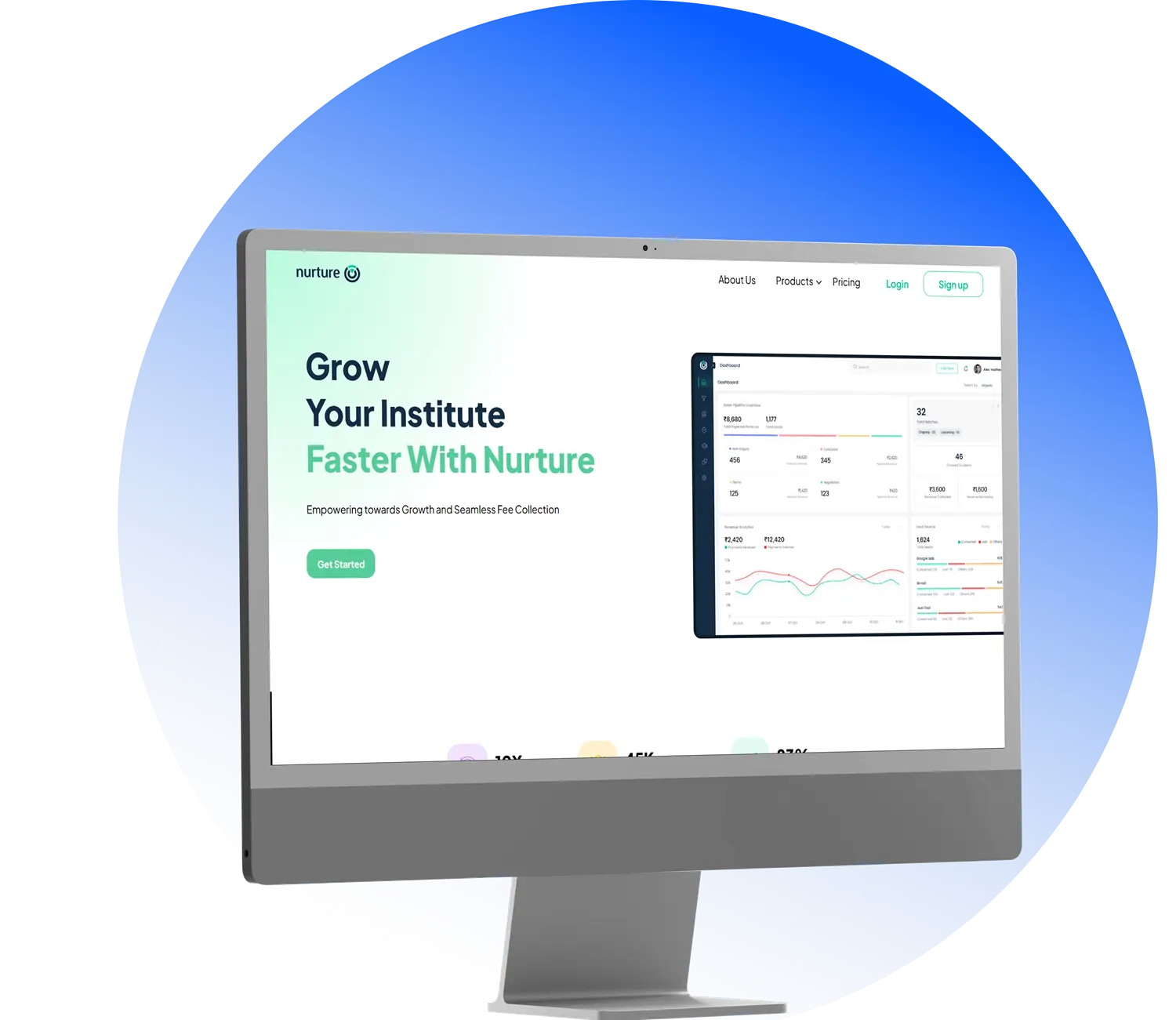
NurtureCRM is an advanced CRM and automation platform designed specifically for educational institutions. It helps institutes streamline their lead flow, automate nurturing, improve team collaboration, and simplify payment collection, all in one system.

What pain-points NurtureCRM addresses?

  • Centralizes student, lead, and course management in one platform.
  • Automates follow-ups, admissions, and counselling workflows to save time.
  • Tracks payments, batches, and attendance for complete operational visibility.
  • Integrates CRM updates automatically, reducing manual data entry.
  • Provides insights and reports to improve decision-making for institute growth.
  • Supports communication via email, SMS, and notifications to engage leads effectively.

Offices :

Bangalore, India

Business Type :

B2B SaaS

Industry:

Edtech CRM

Ideal Customer Profile :

Regions: India ( Metro Cities)

Buyer Persona: Institute founders, education business owners, coaching directors, admissions heads, operations managers, and EdTech entrepreneurs.

Domains: Education & Training Industry

Company Size: Small-to-mid SaaS companies (20–50 employees)

Our Observations & Challenges

lead (CPL) was unsustainably high, and the lead-to-paid-customer ratio was far below industry benchmarks

Before partnering with us, NurtureCRM faced key performance issues:

  1. High Cost Per Lead
    • Previous CPL: ₹800 – ₹1,100
    • Resulting in limited scalability
  2. Low Lead-to-Paid Customer Ratio
    • Only 12–15% from lead → paying customer
    • Below industry benchmarks for SaaS in the education segment
  3. Inefficient Lead Qualification
    • High volume of unqualified leads
    • Low SQL (Sales Qualified Lead) percentage
  4. Need for Automation Adoption
    • Institutes were not fully aware of the value of process automation
    • Target decision-makers were scattered across metros

Our Strategies

Full-Funnel Performance Marketing Setup

We rebuilt the funnel across Meta Ads and integrated automations:

  • Cold audience campaigns targeting education founders, business owners, and institute directors
  • Retargeting campaigns based on website visitors & engagers
  • Instant automation for inbound enquiries using WhatsApp & Meta lead flow optimization.

Optimization in First 30 Days

We analyzed performance and introduced fine-tuned targeting:

  • Narrowed down audiences to metro cities with higher purchase intent
  • Adjusted spending based on institute segmentation and CRM buyer persona
  • Implemented automation to instantly qualify and route leads to team members

CPL improvement achieved in the first month: From ₹800–1,100 ➝ ₹550–700

Webinar Funnel Setup

To attract high-intent leads, we launched a value-driven webinar:

  • Messaging focused on “Automate your institute operations & improve revenue.”
  • Targeted institute owners, education entrepreneurs & coaching center founders

Webinar Results

  • CPL: ₹80–₹150
  • Total Leads: 200
  • Webinar Participants: 76
  • Audience: Business owners, institute founders, education CEOs
  • All from metro cities

The webinar delivered not just leads, but quality, sales-ready conversations.

SQL Improvement

Through:

  • Better targeting
  • Automated lead qualification
  • Improved nurturing workflows

We increased the SQL ratio by 13% within 45 days.

Our Execution:

1. Built a Full-Funnel Performance Framework

We restructured the entire marketing funnel across Meta platforms, Facebook, Instagram, and WhatsApp, focusing on intent-based messaging and automated lead handling.

2. Implemented Metro-Only Targeting

Based on conversion data, we narrowed targeting to metro cities with higher CRM adoption and stronger purchasing power. This immediately improved lead quality and reduced CPL.

3. Refined ICP Targeting

We shifted the focus to decision-makers: Institute owners, founders, directors, education business owners, and EdTech entrepreneurs.

This eliminated irrelevant traffic and increased SQLs.

4. Deployed Automation for Lead Management

To improve speed-to-lead, we set up:

  • Automated WhatsApp replies
  • Instant routing to counsellors
  • Lead tagging & scoring
  • Follow-up drips

This reduced drop-offs and improved engagement.

5. Optimized Budgets Based on Institute Segments

We redistributed ad spending to the best-performing metro cities and interest clusters. This led to stronger efficiency and consistent CPL reduction.

6. Launched a High-Intent Webinar Funnel

We created a webinar campaign focusing on:
“How institutes can automate operations & increase admissions.” This brought in highly qualified prospects at a lower cost.

7. Continuous Testing & CRO

We tested multiple:

  • Creatives
  • Hooks
  • Landing flow
  • CTAs
  • Audiences

This iterative optimization helped bring CPL down month-on-month and boosted conversion efficiency.

What worked?

1. Metro-Focused Targeting

Targeting only metro cities helped reach decision-makers who were more aware of CRM solutions and had higher purchase readiness. This significantly improved lead quality and reduced CPL.

2. Narrowing Down to Owners & Founders

Focusing on institute owners, education founders, and business owners ensured that the enquiries were from people with actual authority to buy.

3. Webinar Funnel Strategy

The webinar approach generated high-intent leads at a very low cost (₹80–₹150). Out of 200 leads, 76 attended — a strong 38% attendance rate.

4. Improving Lead Qualification

Setting up automated flows and better filters increased the SQL ratio by 13%, reducing time wasted on junk leads.

5. Adjusted Ad Spend Based on Institute Segments

We optimized budgets for:

  • Better-performing cities
  • High-quality interest segments
  • Retargeting pools

This pushed CPL down to ₹380–₹550 within 45 days.

6. Automation for Enquiry Handling

The instant follow-up flows on WhatsApp & Meta:

  • Reduced response delays
  • Increased inbound call pickups
  • Moved leads faster to the sales team

What didn't work?

1. Initial Broad Targeting

Early campaigns that targeted wide education interests brought in:

  • More junk leads
  • Lower-quality traffic
  • Higher CPLs (₹800–₹1,100)

2. Generic Ad Creatives

Initial creatives that focused on CRM features didn’t resonate. The shift to problem-solution messaging (automation, lead leakage, and fee collection issues) improved engagement.

3. Lack of Retargeting Depth

At the beginning, the retargeting pool was small. As we built more traffic, retargeting began performing strongly — but initial weeks had weaker results.

4. Low Awareness About CRM

Many institutes didn’t initially understand CRM automation benefits, which made the cold campaigns slower in generating qualified leads.

5. Too Many Unqualified Leads Before Automation

Before nurturing flows were set up, many leads were not responding or converting. Automation helped filter and engage them properly.

End Result

1. Cost Per Lead Reduced by 52–65%

  • Before: ₹800–₹1,100
  • After Optimization: ₹380–₹550

This drastic drop made the campaigns far more scalable and budget-efficient.

2. Lead-to-SQL Conversion Improved by 13%

Automation + refined targeting brought in higher-quality leads, enabling the sales team to focus on prospects with actual buying intent.

3. Webinar Funnel Delivered High-Intent Leads

  • CPL: ₹80–₹150
  • Total Leads Generated: 200
  • Participants: 76 (38% attendance)

These were business owners, education founders, and institute directors — exact ICP profiles.

4. Improved Lead-to-Paid Customer Ratio

From a baseline of 12–15%, the conversion rate significantly improved (moving toward industry benchmarks) as lead quality and nurturing flows strengthened.

5. Faster Lead Handling Through Automation

  • Automated WhatsApp follow-ups
  • Immediate routing to the sales team
  • Reduced delays in call-backs

This increased engagement and speed-to-lead, resulting in better conversions.

6. Stronger Funnel Foundation for Scaling

NurtureCRM now has:

  • Clear ICP targeting
  • A working webinar model
  • A healthy retargeting pool
  • Predictable lead flow
  • Lower acquisition cost
  • Better sales efficiency

Unlock the Growth Potential of your Company

Hop on a call

Case Studies