The way SaaS link-building services work has shifted significantly in recent years. Traditional tactics like mass guest posting or low-quality directory submissions no longer deliver the results they once did. This is because Google keeps updating its search engine algorithms so that relevance and trust are prioritised.
On top of that, better spam detection and filtering through AI make it even more challenging for link-building strategies that are not of high enough quality. These changes require marketers to rethink SaaS marketing processes and focus on quality over quantity.
This blog will provide actionable, proven SaaS link-building strategies that align with current search engine standards. This’ll show you how to build links that will improve your SEO efforts as well as establish authority for your brand.
If you are planning to revamp your existing campaign or to create a new one altogether, the insights shared here will help you adapt to this evolving environment and achieve lasting results.
What Makes SaaS Link Building Unique?

SaaS marketing strategy companies don’t follow the same marketing playbook as e-commerce or local businesses. SaaS companies often need SEO link building services that align with a longer sales cycle and a specific audience. The audience is usually B2B, with specific problems and plenty of alternatives.
That’s where SaaS link building stands apart.
Why Most Traditional Tactics Don’t Work
Old-school tactics like random guest posts or large-scale directory submissions fall short in SaaS. They may build links, but they don’t bring the right traffic. If the reader isn’t your ideal customer, the link adds little value, no matter how high the Domain Rating.
Key Challenges in SaaS Link Building
- Relevance Over Volume
It’s not about how many links you get. It’s about whether those links live on pages your audience reads. Quality wins every time.
- Authority in Niche Markets
Many SaaS agencies serve narrow segments. Building trust and topical authority requires getting links from niche-relevant sites rather than broad tech blogs.
- Scaling Without Spam
You can’t fake good links. Buying backlinks or spinning content might get you short-term wins, but they risk long-term penalties and lost trust.
SaaS link building in 2027 is about placing your product in front of the right reader at the right time. A well-placed link on a comparison blog or use-case article beats a dozen irrelevant backlinks. It’s intent that moves buyers, not just authority scores.
Which Outdated Link Building Tactics Should You Drop Right Now?

SaaS link building requires focus and precision. Some traditional tactics no longer deliver results and can even harm your SEO efforts. Here are common approaches that you should reconsider:
- Random Guest Posting for Volume
Publishing articles anywhere to get links used to work. Low-quality or irrelevant guest posts don’t help and can hurt your reputation. Links only carry real value when they come from websites relevant to your niche and audience.
- Broken Link Building Without Context
Finding broken links and simply replacing them with your URLs isn’t enough. Editors and readers won’t interact with your content if it doesn’t naturally fit. Links must solve an issue or provide genuine insight to be effective.
- Mass Directory Submissions
Bulk submitting your site to online directories used to be a quick win. Today, most directories offer little or no SEO benefit, and Google often flags these as spammy or low-value links.
- Overreliance on PR Mentions with No Traffic Value
Getting your brand’s name featured in press releases or media without targeted traffic is ineffective. Backlinks with high authority should drive relevant visitors as well as improve scores.
Google’s algorithms have evolved to detect low-effort link building. For SaaS Link Building to be effective in 2027, prioritize meaningful, relevant, and purposeful links over volume or shortcuts.
How Much Should B2B SaaS Companies Spend on Link Building?
When it comes to link building for SaaS companies, budget allocation is a crucial part of the strategy. While there’s no one-size-fits-all answer, understanding the value of link building and its role in your broader SEO efforts can help determine an appropriate investment.
Typical Link Building Budget for SaaS:
- Small to Mid-Sized SaaS Companies:
Link building often accounts for 10–20% of these businesses’ expenditures. Given that SaaS businesses often target niche markets, quality link acquisition becomes a priority over volume. As these businesses scale, they may increase their link-building budget, particularly if they’re looking to expand their online presence.
- Enterprise SaaS Companies:
Larger SaaS companies might allocate 20-30% of their SEO budget to link building. These companies typically have a broader reach and more competitive keywords, requiring more extensive, ongoing link-building efforts.
Factors Affecting Your Link Building Budget:
- Competitiveness of Your Niche: If you’re in a highly competitive market, like cloud computing or marketing automation, you’ll need to invest more in securing high-quality links from authoritative sources to stand out.
- Content Quality and Resource Allocation: High-quality content that naturally attracts backlinks, such as case studies, research, and in-depth blog posts, may reduce the need for manual link-building efforts, allowing you to allocate your budget elsewhere.
- Growth Stage of Your Company: Early-stage SaaS companies might prioritize link building as part of their growth hacking strategy, spending more upfront to gain visibility. As your company matures, you might scale back on active link-building and focus more on content optimization and customer engagement.
How to Get the Most Value Out of Your Budget:
- Focus on niche-specific link-building strategies that target websites your ideal customers visit.
- Combine manual outreach with automated link-building services to streamline the process without compromising quality.
- Track ROI by monitoring changes in keyword rankings, referral traffic, and conversions from the links you acquire.
What Are 12 Proven SaaS Link Building Strategies That Actually Work Today?
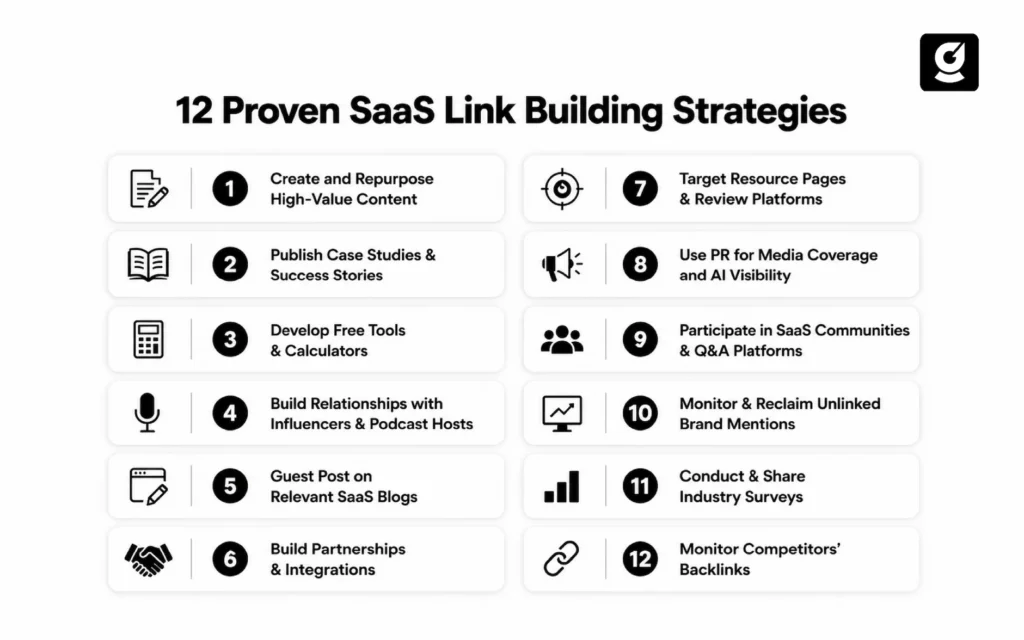
Effective SaaS link building requires a thoughtful approach tailored to the software industry’s needs. Here are 12 strategies that deliver consistent results:
1. Create and Repurpose High-Value Content
Content that thoroughly covers important topics naturally attracts backlinks. Comprehensive guides, how-to articles, and original research tailored to your SaaS niche answer real questions and solve problems, giving other websites and blogs a trustworthy resource to reference.
Once you have strong-performing content, extend its reach by transforming your best SaaS blog posts into different formats, including explainer videos, infographics, podcasts, or slide decks. Distributing these formats across various channels increases your chances of earning backlinks from diverse audiences who prefer different content types.
2. Publish Case Studies and Success Stories
Sharing detailed case studies about how your SaaS product marketing by agencies has helped clients overcome challenges adds credibility. Such stories resonate with prospects and industry publications alike. Partners and customers are often happy to link to these success stories, helping expand your reach and attract authoritative backlinks.
3. Develop Free Tools and Calculators
Interactive tools like ROI calculators, pricing comparison charts, or productivity trackers are highly shareable assets. They provide practical value that others want to reference and recommend. Offering a free tool also encourages organic mentions and backlinks, a key to effective SaaS link building, from blogs and SaaS review sites that help users evaluate software options.
4. Build Relationships with Influencers and Podcast Hosts
Engaging with SaaS influencers, including bloggers, analysts, thought leaders, and niche podcast hosts, can open doors to quality backlinks. Start by genuinely interacting with their content: comment on posts, share insights, or suggest collaboration ideas.
Once a relationship is built, they may link to your content, invite you to contribute guest posts, or have you on as a podcast guest, each widening your backlink opportunities. Podcast appearances carry extra value today, since they typically earn a link in the show notes and the transcript itself can get picked up and cited by AI search tools.
5. Guest Post on Relevant SaaS Blogs
Publishing articles on established SaaS or technology websites lets you tap into existing audiences while earning backlinks. Choose blogs with a relevant readership and high authority. Ensure your guest posts offer unique insights or solutions, reinforcing your brand’s expertise and encouraging readers to visit your site via backlinks.
6. Leverage Partnerships and Integrations
A SaaS marketing agency often collaborates with complementary products, which are valuable sources for backlinks. Request content on your partner’s website, co-create content such as webinars or whitepapers, and share each other’s news. This approach creates natural backlinks and exposes your product to a broader audience.
7. Target Resource Pages and Review Platforms
Many SaaS buyers refer to curated resource lists and review platforms like G2 and Capterra when researching software. Identifying and submitting your product to reputable directories, resource pages, or review platforms relevant to your niche can drive qualified traffic and build valuable backlinks.
Review platforms carry extra weight today, since they tend to get cited far more often in AI search results than generic resource pages. Make sure to select directories and platforms with strict quality guidelines to avoid low-value links.
8. Use PR for Media Coverage and AI Visibility
Pitch your company’s newsworthy announcements to journalists and tech bloggers, such as product launches, funding rounds, or unique research findings. Media coverage on respected outlets builds brand trust and often results in high-quality backlinks from authoritative domains.
In 2027, this coverage does double duty: the same trusted sources that earn you backlinks are also the ones AI search engines pull from when forming answers. So strong PR placements increasingly translate into AI citation visibility as well as traditional link equity.
9. Participate in SaaS Communities, Forums, and Q&A Platforms
While many forums restrict direct linking, active participation establishes your authority in the SaaS space. Sharing valuable insights can lead community members to share your content elsewhere, generating backlinks indirectly. SaaS startups should use platforms like Reddit, LinkedIn groups, and niche SaaS forums to network and raise awareness.
Reddit and Quora deserve special attention here. When buyers search for alternatives to competing products, they’re increasingly finding real user discussions on these platforms instead of traditional blog articles.
Being genuinely helpful in these conversations can earn your brand visibility and citations even without a direct link.
10. Monitor and Reclaim Unlinked Brand Mentions
Not every mention of your brand online comes with a link. Set up alerts to track when your product, company, or content is referenced without a backlink, then reach out and ask for one to be added. This is often a quick win, since the writer has already shown interest in your brand and just needs a nudge.
Even mentions that stay unlinked still carry value, acting as trust signals that AI search tools use to judge how credible and widely recognized your brand is.
11. Conduct and Share Industry Surveys
Creating original surveys provides exclusive data points that others want to cite. By gathering insights from your users or the broader SaaS community, you generate unique content that earns natural backlinks from blogs, news sites, and industry reports referencing your findings.
12. Monitor Competitors’ Backlinks
Regularly analyse where your competitors are gaining backlinks. Tools like Ahrefs or SEMrush can reveal opportunities you might be missing. Use this insight to pursue similar links, whether through guest posts, partnerships, or listings, helping you stay competitive in your link-building efforts.
Implementing these SaaS link building strategies helps companies grow their online presence, improve search rankings, and attract targeted traffic. The key is consistently building authentic relationships and providing value through content and collaboration.
What Are the Common Mistakes to Avoid While Link Building for SaaS Companies?
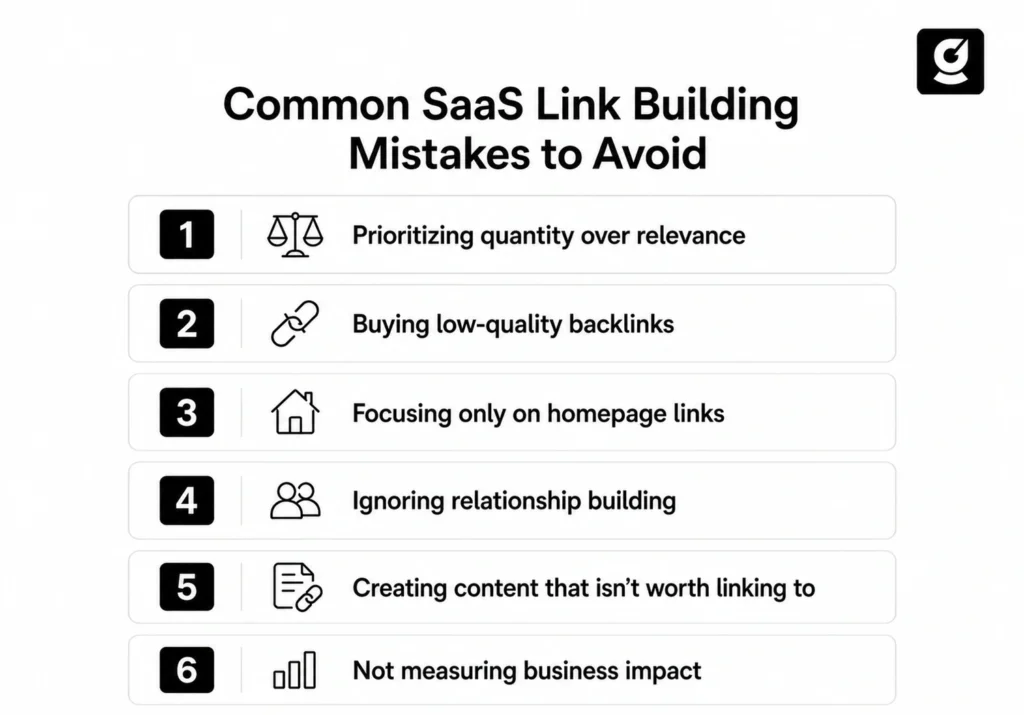
Even businesses with a strong SEO strategy can struggle with SaaS link building if they focus on the wrong priorities. Avoiding these common mistakes helps link building for SaaS companies deliver better rankings, stronger authority, and more qualified traffic:
1. Prioritizing quantity over relevance
Getting backlinks from websites that aren’t relevant to you will not help in improving ranking. If your aim is link building for SaaS, backlinks from industry-specific publications, B2B blogs, and trusted SaaS communities deliver far greater value than large volumes of low-quality links.
2. Buying low-quality backlinks
Purchasing cheap backlink packages may provide you with quick numbers. However, over time they will damage your rankings. Instead, choose a SaaS link building agency that focuses on editorial, relevant, and relationship-driven backlinks.
3. Focusing Only on Homepage Links
A lot of companies merely create links to their homepage. Instead, spread authority across product sites, feature pages, comparison pages, and instructional resources to boost ranks across the buyer journey.
4. Ignoring Relationship Building
Successful link development for SaaS companies is more than just sending outreach emails. Long-term connections with partners, industry experts, customers, and media provide recurrent backlink opportunities that one-time campaigns do not.
5. Creating content that isn’t worth linking to
Thin blogs rarely attract natural backlinks. Original research, case studies, comparison pages, free tools, and data-driven resources are much more likely to earn links organically.
6. Not measuring business impact
Successful link building for SaaS companies isn’t measured by backlink count alone. Track referral traffic, keyword growth, conversions, and pipeline influence to understand whether your link-building efforts are driving real business results.
Avoiding these mistakes puts your efforts on the right track and helps you build the best SaaS link building strategy for steady, long-term growth.
What Makes a High-Quality SaaS Backlink in 2027?
In 2027, building high-quality SaaS backlinks requires a more strategic approach than ever before. Google’s algorithms have evolved to focus on relevance, authority, and trust rather than just the volume of backlinks.
Here’s what defines a high-quality SaaS backlink today:
- Relevance to Your Niche:
The best SaaS backlinks come from sites that are relevant to your industry or niche. For example, a link from a SaaS review site or a B2B tech blog is more valuable than one from a broad, unrelated site. Relevance ensures the backlink resonates with your target audience and helps increase your domain authority within your industry.
- Authority of the Linking Domain:
The authority of the website linking to you is a crucial factor. Links from high-authority domains (those with strong trust and high Domain Authority, like tech blogs or SaaS influencers) will boost your website’s credibility and improve your SEO rankings. Backlinks from reputable sources indicate to search engines that your content is trustworthy and relevant.
- Natural Placement:
A high-quality SaaS backlink should be placed naturally within high-value content. A link embedded within an informative blog post or case study has more weight than one placed randomly in a list of links or on a low-quality page. Contextual backlinks (those that are relevant and provide value to readers) are seen as more authentic and authoritative.
- Diverse Link Profile:
To build a robust link profile, diversify your sources of backlinks. A mix of guest posts, media mentions, resource pages, partnership links, and forum/community contributions creates a natural, well-rounded backlink profile. A variety of backlinks helps search engines understand your site’s authority across multiple channels and platforms.
- Engagement Potential:
Quality backlinks impact your SEO, and they also need to bring engaged visitors. Links from websites that have a high level of engagement, such as active comments, social shares, or click-throughs, are more valuable than links from dormant sites. When relevant users engage with the content, it sends a positive signal to search engines.
- Editorial Backlinks:
Editorial links (those added by site editors because they find your content valuable) are some of the most trusted backlinks by Google. These are often acquired through outreach or guest posts that offer original insights and resources, making them one of the best types of backlinks.
- Link Placement Within Content:
Placement matters. Backlinks placed within the body of a post (especially in the first 100 words) are more valuable than those placed in footers or sidebars. Ideally, your links should come from content that directly relates to the link’s anchor text.
Introducing growth.cx: Powering Business Growth Through SaaS Link Building

Manual link building often involves repetitive tasks that can slow progress and introduce errors. For SaaS companies aiming to scale, relying solely on manual efforts limits growth and wastes valuable time.
For SaaS marketers and SaaS marketing agencies, growth.cx simplifies scaling link building campaigns without sacrificing results. The agency assists in key stages like link prospecting and outreach, allowing teams to focus on strategy and relationship-building rather than tedious data gathering.
With growth.cx, users benefit from personalized outreach sequences that improve response rates by targeting prospects with relevant messaging. We deliver data-driven insights that give businesses clear visibility into campaign performance, helping identify which prospects convert best and allowing real-time adjustments.
Key features tailored for SaaS marketers include:
- Automated discovery of high-quality, relevant link opportunities based on SaaS trends.
- Customizable outreach workflows that save hours on manual email communication
- Real-time tracking of email opens, replies, and link acquisition progress
- Detailed prospect profiles to tailor messaging and build stronger connections
- Integration with popular CRM and email platforms for smooth campaign management
- Bulk email scheduling with follow-up sequences to maximise response rates
Clients using growth.cx typically sees a marked increase in backlinks, improved website traffic, and significant time savings in their link-building process, especially when they try to include high-quality, relevant domains. For SaaS companies looking to scale organic growth efficiently, partnering with a SaaS SEO agency that leverages growth.cx can be a decisive advantage.
Conclusion: Long-Term Link Building Secures SaaS Growth
Sustained success in SaaS link building comes from consistent efforts focused on quality and relevance. What truly works is producing valuable content, building genuine relationships, and encouraging partnerships that naturally earn trusted backlinks. Quick fixes and shortcuts rarely deliver lasting results in this space.
A sustainable, audience-first approach ensures your links contribute to real growth. By understanding your customers’ needs and creating resources that address them, you build a backlink profile that search engines recognize and reward. This approach also strengthens your brand’s reputation and authority over time.
Link building should be a long-term investment in your SaaS company’s organic presence. It’s the foundation of a competitive moat that becomes harder for others to replicate as you grow.
If you struggle to get meaningful backlinks that drive actual results, it’s time to reassess your strategy. Book a SaaS SEO audit with growth.cx, a trusted saas seo agency, and let’s work together to build a link profile that supports your growth goals.
FAQs
How do SaaS companies get backlinks?
SaaS companies can get backlinks through various strategies such as guest posting, content marketing, partnerships, PR outreach, and influencer collaborations. By creating valuable resources, case studies, and tools, SaaS businesses attract backlinks from other authoritative websites within their industry.
Is link building important for SaaS SEO?
Yes, link building is crucial for SaaS SEO. Backlinks from high-authority websites signal to search engines that your site is trustworthy and relevant. This helps improve rankings, drive targeted traffic, and increase brand credibility in the competitive SaaS market. Without effective link building, a SaaS company may struggle to gain organic visibility.
What are the best SaaS link building strategies?
Some of the best SaaS link building strategies include creating high-value content, leveraging industry partnerships, conducting guest posts on relevant blogs, developing interactive tools, and engaging with influencers. Building a diverse and authoritative backlink profile through these methods ensures long-term SEO success for SaaS companies.