For B2B SaaS companies, getting clicks is rarely the hardest part of PPC. The real challenge is turning paid traffic into qualified opportunities that sales teams can actually convert. A lower CPL may look positive in an ad dashboard, but it means little if those leads never progress into demos, pipeline, or revenue.
That is what these B2B SaaS PPC case studies examine.
Across Visitly, AIO Tests, IONA, Impulze, and FlowRad, growth.cx used different approaches based on each company’s market, ICP, conversion journey, and acquisition problem.
We break down the challenge behind each campaign, the strategic decisions made, how those decisions were executed, the results they produced, and the lessons SaaS teams can apply.
The focus throughout is not ads → clicks → leads.
But demand → qualified pipeline → revenue.
What Do Our B2B SaaS PPC Case Studies Reveal About Building a Pipeline?
Successful SaaS PPC campaigns are not about getting the most clicks or the lowest CPC. The real goal is attracting the right buyers and creating opportunities that contribute to the pipeline and revenue. A low CPL alone does not guarantee success if those leads lack intent or fail to convert.
A pipeline-focused PPC strategy requires:
- Intent-based targeting: Focus campaigns on audiences actively searching for solutions through relevant keywords, competitor terms, and industry targeting.
- Aligned messaging: Ads and landing pages should deliver a consistent message that improves conversion quality.
- Meaningful conversions: Optimise for actions that impact revenue, such as demos, trials, and qualified sales conversations.
- Lead quality optimisation: Measure campaign success based on the opportunities generated, not just the number of leads.
- Strategy based on SaaS goals: Different companies need different approaches depending on their growth stage, buyer journey, and sales model.
Across these B2B SaaS PPC agencies, the key takeaway is that PPC should be measured by its ability to create qualified demand, pipeline, and revenue rather than just clicks or leads.
Which B2B SaaS PPC Case Studies Show What Actually Works?
The best PPC strategies are rarely about increasing ad spend or chasing cheaper clicks. They are about understanding what prevents a campaign from creating business value and fixing the right part of the acquisition journey.
Across these growth.cx case studies, the challenges were different. Some companies needed better audience segmentation, some needed to remove conversion friction, while others needed a stronger multi-channel approach to reach their ideal buyers. The common focus was improving paid acquisition quality by connecting targeting, messaging, conversion paths, and optimisation decisions to measurable business outcomes.
1. Visitly: How Google PPC Increased MQLs From 191 to 870
The PPC Challenge
Visitly had limited paid acquisition history, which meant there was little campaign data available to understand what audiences and keywords were driving results. The team also needed to improve lead quality, reduce irrelevant sign-ups, and create a clearer connection between paid traffic and conversions.
Key challenges included:
- No previous paid campaign learnings.
- No ad-specific landing pages at the beginning.
- Difficulty identifying high-intent buyer personas.
- Need to reduce low-quality sign-ups.
What Strategy Did We Use?
Growth.cx started with Google Search campaigns and expanded based on campaign learnings. The approach focused on improving relevance through better campaign structure and testing.
Key execution areas included:
- Creating separate ad groups around industries, pricing, competitors, and features.
- Testing different ad copies, CTAs, and landing pages.
- Monitoring search terms and negative keywords.
- Launching Demand Gen campaigns after gaining initial campaign insights.
What Changed?
The campaign delivered:
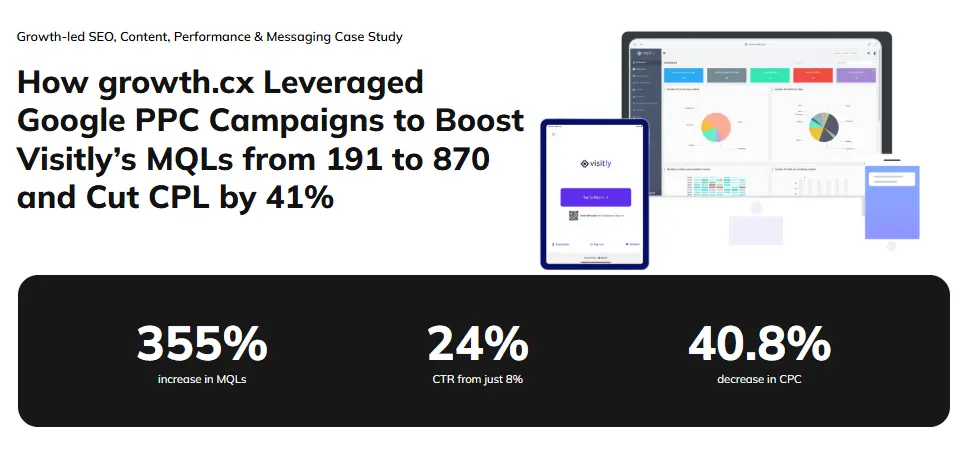
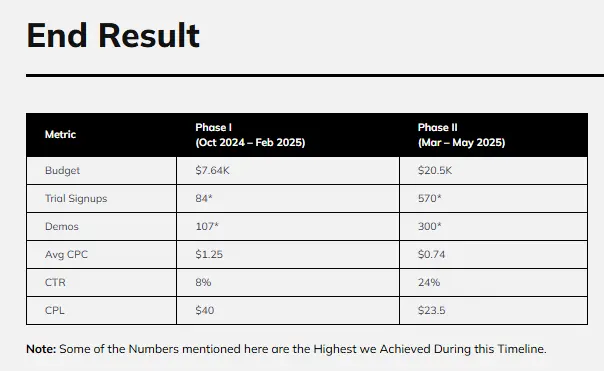
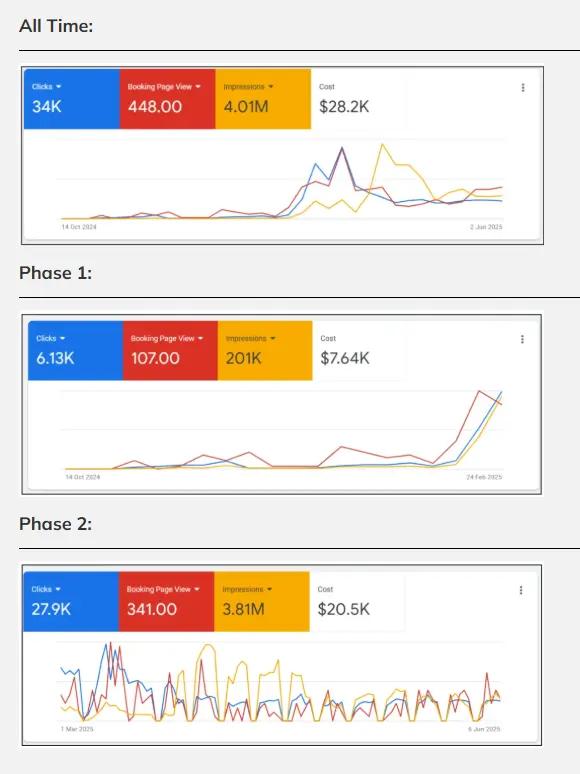
- MQLs increased from 191 to 870.
- CTR improved from 8% to 24%.
- CPC reduced by 40.8%.
- CPL improved from $40 to $23.50.
Key PPC Lesson
Better segmentation improves both lead quality and campaign efficiency.
Visitly’s results came from understanding which audiences converted and structuring campaigns around higher-intent segments rather than relying on broad targeting.
2. AIO Tests: How Removing Conversion Friction Improved PPC Performance
The PPC Challenge
AIO Tests faced challenges scaling paid acquisition because of high CPCs in important markets and friction between ad clicks and product installation. The team also lacked visibility into actual installs generated from paid campaigns.
Key challenges included:
- High CPCs in regions such as the US and EU.
- Lead-form friction before users reached installation.
- Difficulty tracking actual product installs.
- Broad search terms reducing campaign relevance.
What Strategy Did We Use?
The strategy focused on improving conversion quality and tracking accuracy.
Key changes included:
- Starting with India to validate performance at lower CPCs.
- Moving the conversion flow from lead capture toward Atlassian Marketplace installation.
- Adding auto-redirect after CTA clicks.
- Improving install attribution using Usermaven.
- Testing different landing-page CTAs.
- Using high-intent keywords and competitor searches.
What Changed?
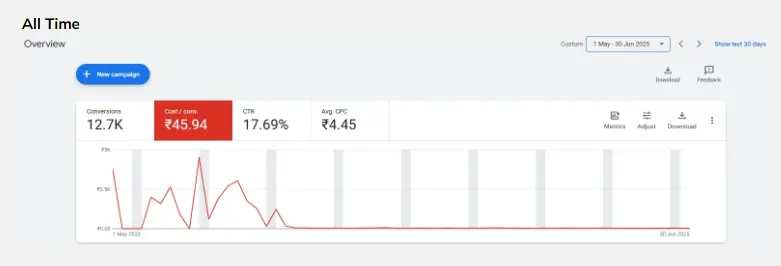
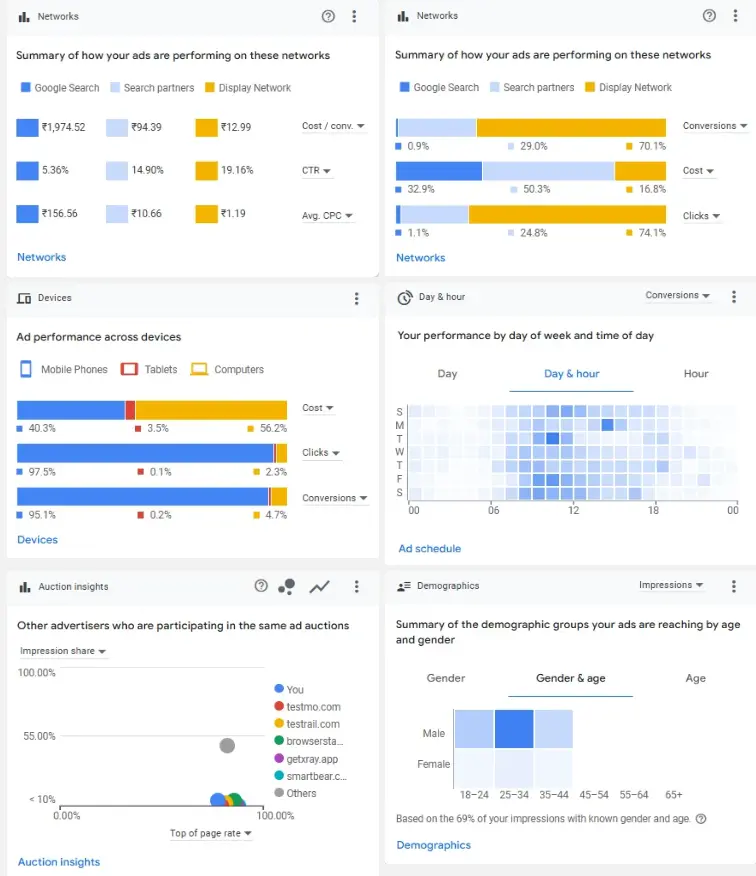
The campaign achieved:
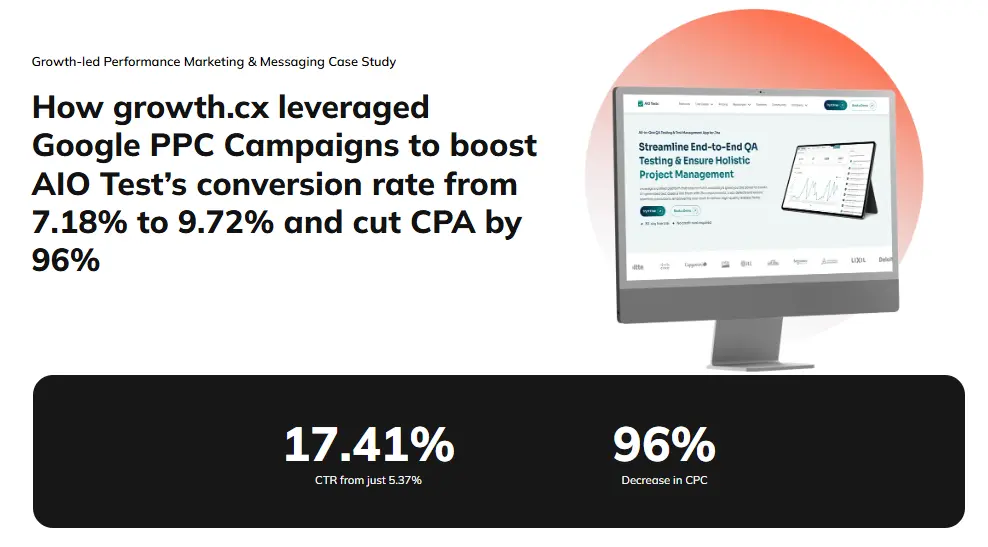
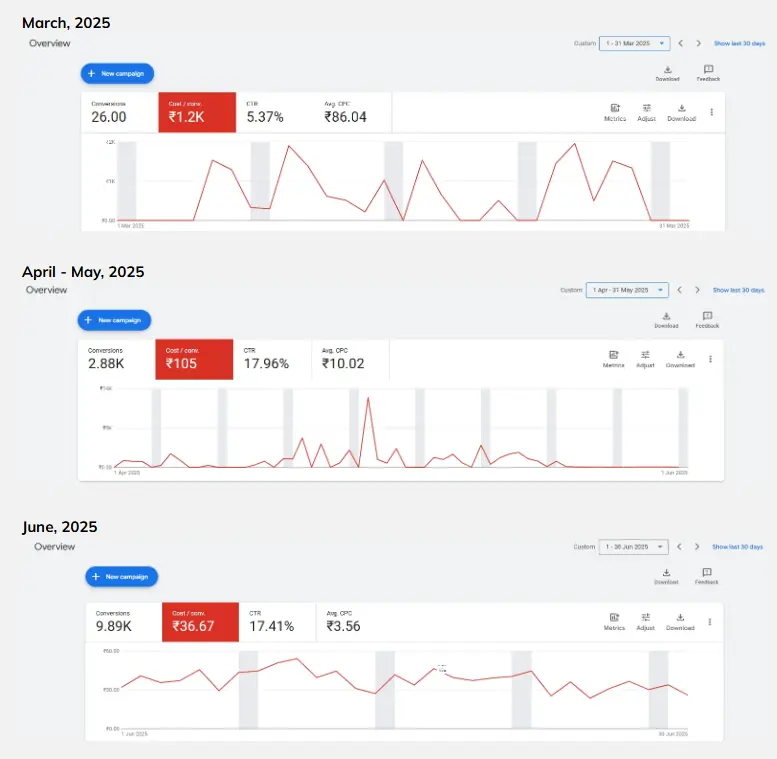
- CTR increased from 5.37% to 17.41%.
- Conversion rate improved from 6.60% to 9.72%.
- Average CPC decreased from ₹86.04 to ₹3.56.
- Cost per conversion reduced from ₹1.2K to ₹36.67.
Key PPC Lesson
Improving what happens after the click can have a bigger impact than only optimising the ad account.
AIO Tests showed that removing unnecessary conversion steps and tracking real user intent improved overall PPC efficiency.

3. IONA: How Google and LinkedIn Generated 100+ MQLs and 25+ Enterprise Demos
The PPC Challenge
IONA needed to generate demand in a competitive HR technology market while reaching the right business decision-makers. For an enterprise-focused SaaS product, generating relevant conversations mattered more than simply increasing lead volume.
Key challenges included:
- Reaching relevant HR and business decision-makers.
- Building demand in a competitive category.
- Generating qualified leads and enterprise conversations.
What Strategy Did We Use?
Growth.cx combined Google and LinkedIn campaigns to capture and create demand across different stages of the buying journey.
The approach focused on:
- Google for capturing existing search demand.
- LinkedIn for reaching targeted B2B audiences.
- Optimising campaigns around qualified outcomes rather than only lead volume.
What Changed?
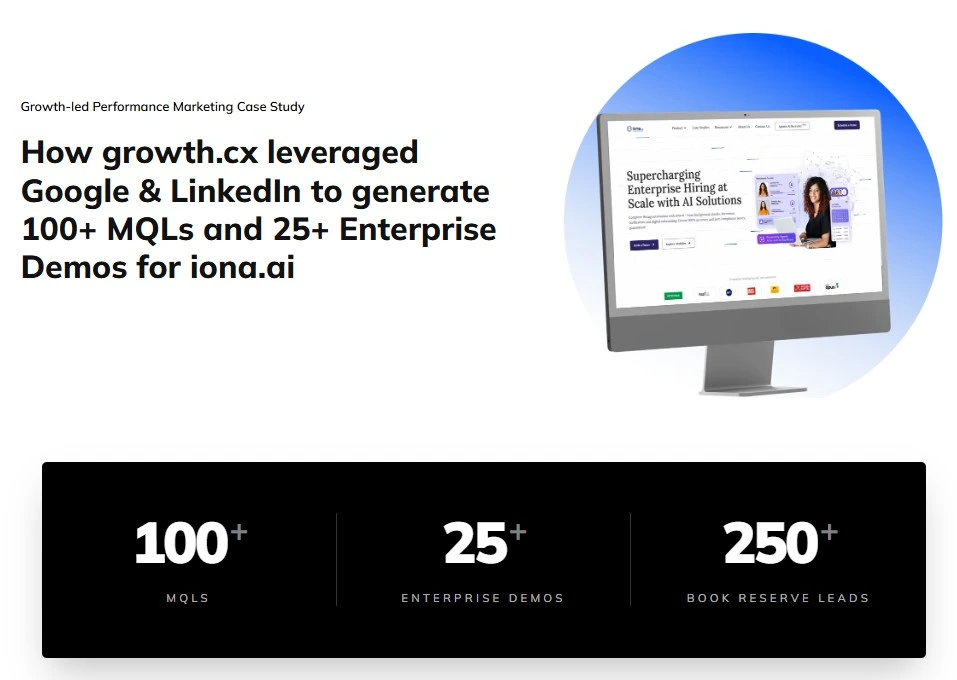
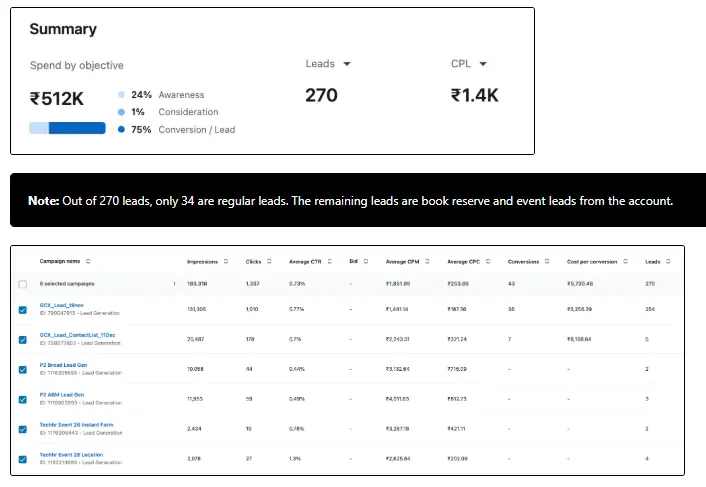
The campaign generated:
- 100+ MQLs
- 25+ enterprise demos
Key PPC Lesson
Different channels can play different roles inside the same B2B SaaS demand engine.
Google captures active intent, while LinkedIn helps reach specific professional audiences that may not be actively searching yet.
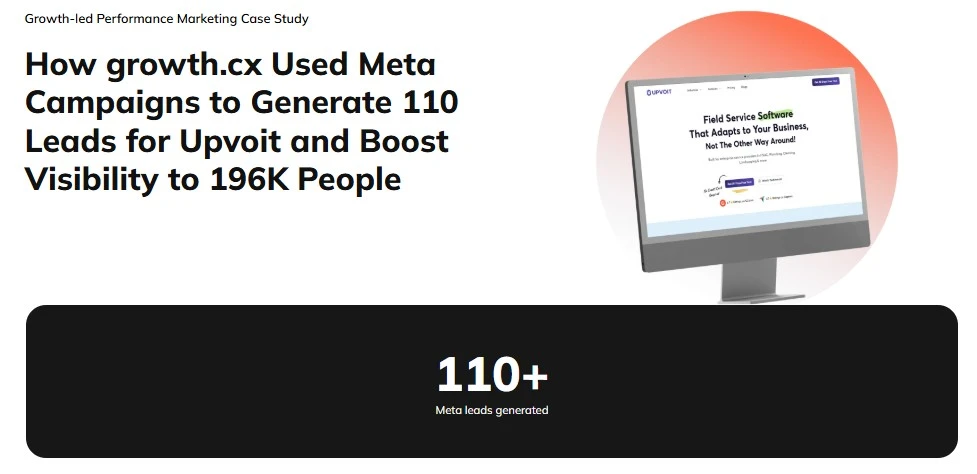
4. Upvoit: How Meta Campaigns Generated 110 Leads and Increased Market Visibility
The PPC Challenge
Upvoit entered a competitive field service management software market as a relatively new SaaS product. The primary challenge was building awareness among relevant audiences while generating qualified leads from markets such as the US and Australia.
Key challenges included:
- Limited market awareness as a newer SaaS product.
- Need to reach service-based businesses and relevant decision-makers.
- Difficulty identifying which audiences were most likely to convert.
- Need to generate leads while improving brand visibility.
What Strategy Did We Use?
Growth.cx started with an awareness-first approach before moving into lead generation campaigns. The strategy focused on testing audience segments, campaign formats, and conversion paths to identify what delivered better results.
The approach included:
- Running Meta awareness campaigns to introduce Upvoit to relevant audiences.
- Transitioning into lead generation campaigns after building initial visibility.
- Testing Instant Form campaigns to capture leads efficiently.
- Testing website conversion campaigns for deeper engagement.
- Refining audience targeting based on campaign performance.
What Changed?
The campaigns delivered:
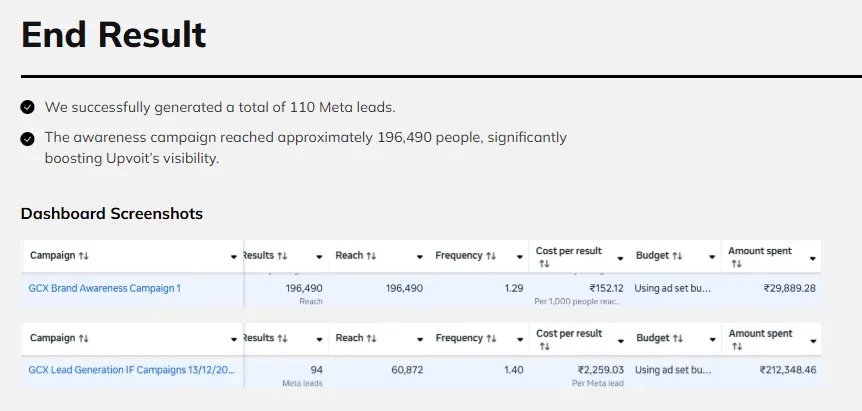
- 110+ Meta leads generated.
- 196,490+ people reached through awareness campaigns.
Key PPC Lesson
Early-stage SaaS companies often need demand creation before demand capture.
Upvoit’s campaign showed that building awareness, testing audience segments, and gradually optimising toward lead generation can help newer SaaS products create measurable acquisition momentum.
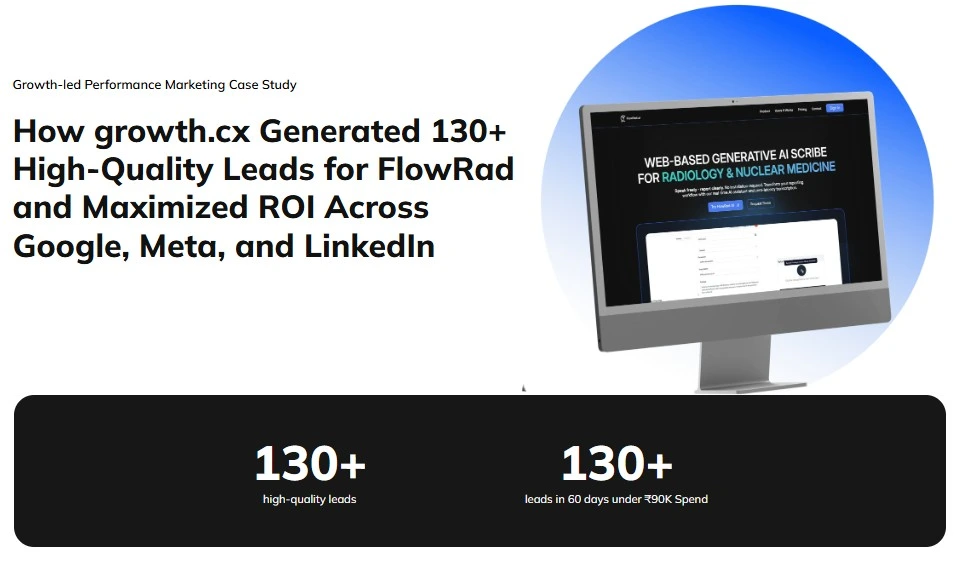
5. FlowRad: How Multi-Channel Paid Campaigns Generated 130+ High-Quality Leads
The PPC Challenge
FlowRad needed to generate demand for an AI-driven radiology solution in a specialised healthcare market. Reaching the right audience required using multiple channels rather than depending on a single acquisition source.
Key challenges included:
- Building awareness for a specialised SaaS solution.
- Reaching relevant healthcare audiences.
- Generating high-quality leads across channels.
What Strategy Did We Use?
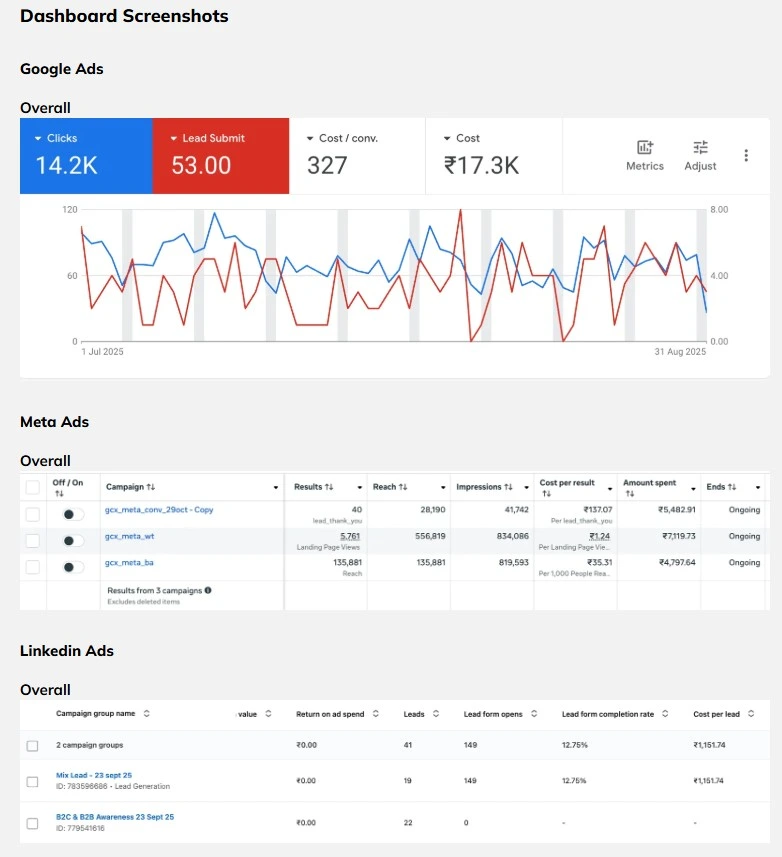
Growth.cx used a multi-channel paid approach across:
- Google Ads for capturing active search demand.
- Meta for broader audience reach.
- LinkedIn for professional targeting.
The campaigns were optimised across channels to improve lead quality and ROI.
What Changed?
The campaign generated:
- 130+ high-quality leads
- Acquisition across Google, Meta, and LinkedIn.
Key PPC Lesson
The right channel mix depends on how your buyers discover and evaluate solutions.
For specialised B2B SaaS products, combining demand capture and demand creation channels can create stronger acquisition outcomes.
The case studies above show that successful PPC campaigns are not built around a single channel, keyword strategy, or advertising platform. They require a connected approach where targeting, messaging, conversion paths, and optimisation decisions work together to create measurable business outcomes.
For SaaS companies, this becomes more important as they move from generating initial demand to building a predictable pipeline. Paid acquisition needs to work alongside other growth activities, helping teams understand who their best buyers are, what messages resonate, and which channels contribute to revenue.
This is where growth.cx approaches PPC differently. Instead of managing paid campaigns as a standalone service, the focus is on connecting paid acquisition with the wider SaaS growth engine.
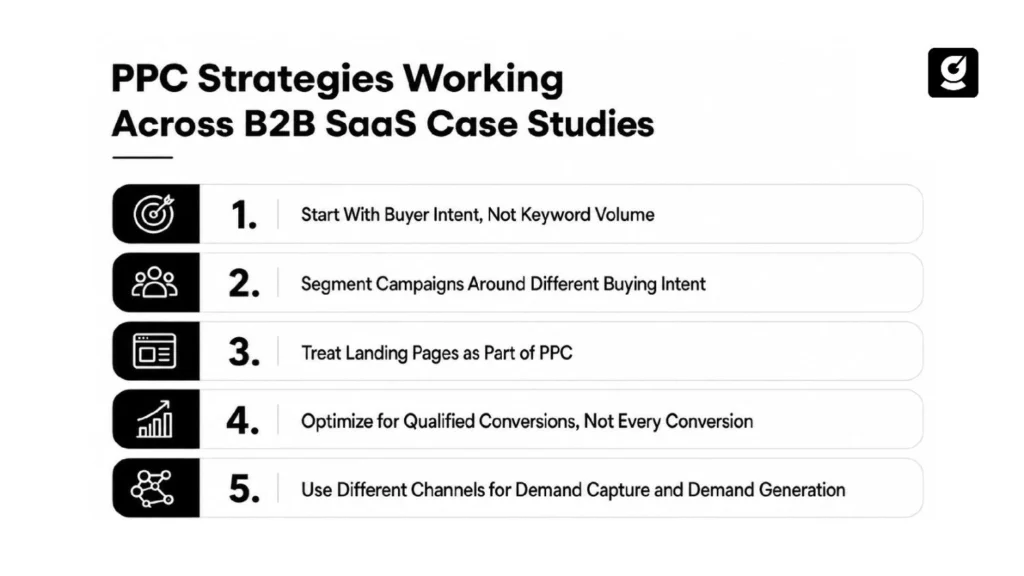
What PPC Strategies Worked Across These SaaS Case Studies?
The PPC strategies that worked across these SaaS case studies are:
1. Start With Buyer Intent, Not Keyword Volume
2. Segment Campaigns Around Different Buying Intent
3. Treat Landing Pages as Part of PPC
4. Optimize for Qualified Conversions, Not Every Conversion
5. Use Different Channels for Demand Capture and Demand Generation
Across these B2B SaaS PPC case studies, one pattern stands out: successful campaigns were not built by increasing budgets alone. The strongest results came from understanding buyer intent, improving campaign relevance, removing conversion friction, and optimising towards business outcomes.
1. Start With Buyer Intent, Not Just Keyword Volume
High-performing PPC campaigns focus on searches that indicate a genuine need for a solution. Instead of chasing high-volume keywords, SaaS teams should prioritise:
- Commercial searches from buyers actively evaluating solutions.
- Competitor searches from prospects comparing alternatives.
- Feature and problem-based searches showing specific intent.
- Keywords that attract potential customers, not just website visitors.
2. Segment Campaigns Around Different Buying Intent
A single campaign structure rarely works for every SaaS audience. Segmenting campaigns helps teams understand which audiences and messages drive better results.
Common segments include:
- Brand searches from existing demand.
- Category searches from prospects exploring solutions.
- Competitor searches from comparison-stage buyers.
- Feature-based searches from users looking for specific capabilities.
- Industry or use-case searches from targeted customer segments.
3. Treat Landing Pages as Part of PPC Performance
A PPC campaign does not end when someone clicks an ad. The landing page experience determines whether that visitor becomes a meaningful conversion.
AIO Tests improved campaign performance by reducing friction between ad clicks and product installation, while Visitly used dedicated landing pages and testing to improve conversion quality.
4. Optimise for Qualified Conversions, Not Every Conversion
For SaaS companies, the most valuable conversion is not always the first form submission. Campaign success should be connected to actions that influence revenue, including:
- Marketing-qualified leads (MQLs).
- Product trials.
- Demo requests.
- Sales-qualified leads (SQLs).
- Sales opportunities.
5. Use Different Channels for Different Growth Goals
Different paid channels support different stages of the SaaS buying journey:
- Google Ads: Captures existing demand from people actively searching for solutions.
- LinkedIn Ads: Helps reach specific business audiences and decision-makers.
- Meta Ads: Supports awareness and demand creation, especially for early-stage SaaS products.
- Demand Gen campaigns: Helps expand reach once enough audience and performance data is available.
How Does growth.cx Approach PPC as Part of a SaaS Revenue Engine?
growth.cx approaches PPC as part of a complete demand-generation system designed around ICP, buyer intent, and pipeline outcomes. Campaign decisions begin by understanding the target audience, their search behaviour, buying stage, and the actions that indicate genuine purchase intent.
The approach connects paid campaigns with:
- ICP-based campaign strategy: Campaign targeting is built around the ideal customer profile, helping reach audiences more likely to become qualified opportunities.
- Buyer-intent-driven optimisation: Keyword selection, audience targeting, and campaign adjustments focus on capturing relevant demand rather than chasing clicks or low-cost traffic.
- Connected landing pages and CRO: Paid campaigns are aligned with messaging, landing pages, and conversion optimisation to improve the quality of inbound opportunities.
- Multi-channel demand generation: Growth.cx selects channels such as Google Ads, LinkedIn Ads, and other paid platforms based on how SaaS buyers discover, evaluate, and purchase solutions.
- Pipeline-focused measurement: Performance is evaluated through qualified demand, MQLs, sales opportunities, and pipeline contribution instead of only CPC, CTR, or lead volume.

What Can These B2B SaaS PPC Case Studies Teach Your Growth Team?
These B2B SaaS PPC case studies show that there is no single PPC playbook that works for every SaaS company. The right approach depends on the product, target audience, buying journey, and the specific growth challenge a company needs to solve.
Visitly’s results came from better campaign segmentation and improving audience relevance. AIO Tests improved PPC efficiency by reducing conversion friction and creating a clearer path from ad click to product installation. IONA required a multi-channel approach to reach enterprise buyers, while FlowRad used channel diversification to generate demand in a specialised market.
Building a predictable SaaS growth engine requires more than running ads. It requires connecting paid acquisition with the right strategy, messaging, conversion journey, and business goals.
Want to turn your PPC campaigns into a predictable pipeline engine? Explore how growth.cx helps B2B SaaS companies build paid acquisition strategies focused on qualified demand, pipeline, and revenue growth.
FAQs
Examples of successful B2B SaaS companies using Google Ads for growth.
Examples include Visitly and AIO Tests, where Google Ads optimisation improved lead quality, conversion performance, and acquisition efficiency through better targeting, campaign structure, and conversion-path improvements.
Where can I find detailed B2B SaaS PPC case studies with ROI analysis?
Detailed B2B SaaS PPC case studies can be found on Growth.cx, showcasing real campaign challenges, strategies, execution approaches, and measurable outcomes related to leads, conversions, and pipeline growth.
What are the key performance indicators highlighted in B2B SaaS PPC success stories?
Important PPC KPIs include qualified leads, MQLs, SQLs, demo requests, conversion rates, CPL, CPC, pipeline contribution, customer acquisition cost, and revenue generated from paid campaigns.
How can B2B SaaS companies reduce PPC cost per lead?
Companies can reduce CPL by improving keyword targeting, removing irrelevant traffic, refining audience segments, improving ad relevance, optimising landing pages, and focusing campaigns on high-intent prospects.
How can PPC campaigns generate more qualified demos for SaaS companies?
PPC campaigns generate qualified demos by targeting high-intent audiences, using relevant messaging, optimising conversion journeys, and measuring success based on demo quality and sales pipeline rather than lead volume alone.