Growth-led SEO + CONTENT + SOCIAL MEDIA + PAID ADS Case Study
How growth.cx helped SchoolVoice build search authority and a qualified pipeline across MEA's school communication market
72%
increase in monthly organic traffic over 8 months
36%
Reduction in paid media CPL $64 → $41
118%
rise in Google search impressions over 9 months
About SCHOOLVOICE
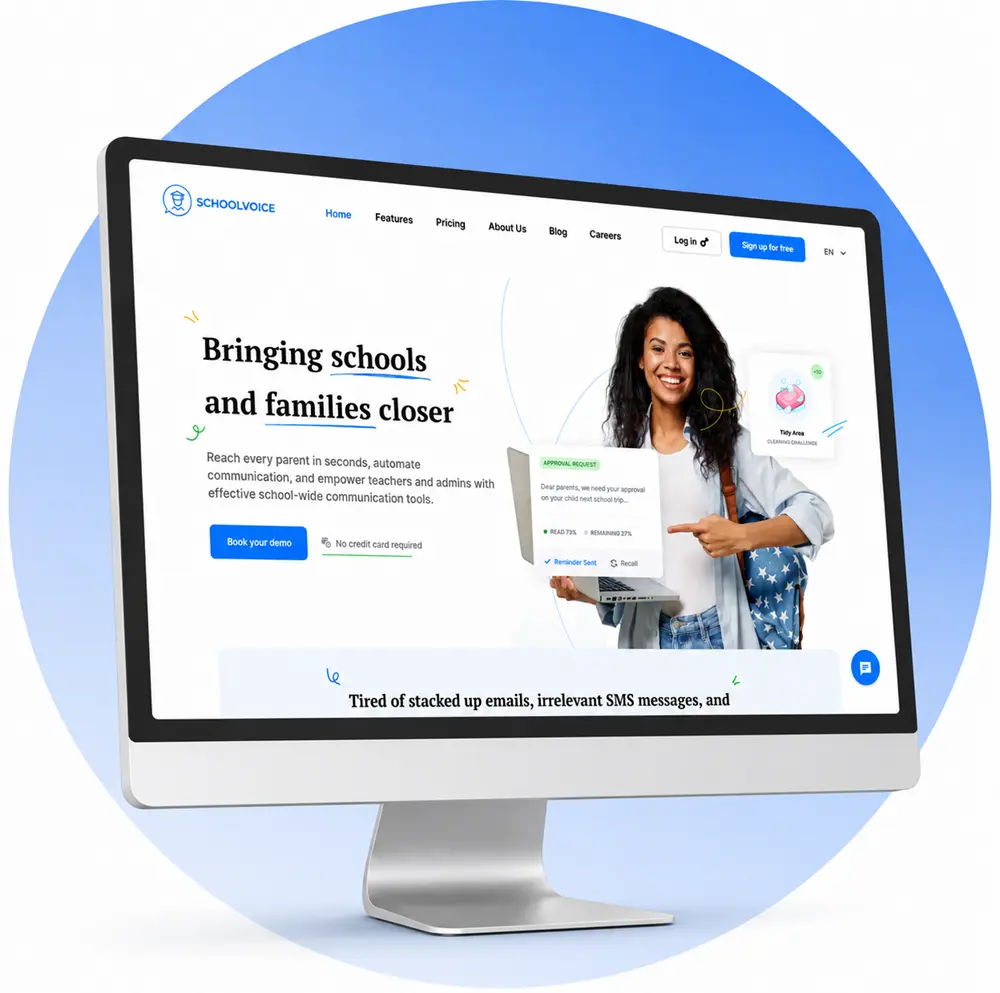
SchoolVoice is a school communication platform that helps educational institutions improve how schools, parents, teachers, and students stay connected. Its mobile-first tools cover announcements, direct messaging, digital collaboration, and real-time engagement across the school community.
Website :
https://www.schoolvoice.com/enBusiness Type :
B2B SaaS
Offices :
Abu Dhabi, UAE
Engagement:
9 months
Ideal Customer Profile :
Primary Markets: UAE, Saudi Arabia, Egypt
Buyers: Principals, School Owners, IT Directors, Comms Heads
Industry: Education Technology
School Size: 300–5,000+ students
Domains: K-12 Private, International, IB, British & American Curriculum
The Challenge
-
01
A strong product that is invisible to the buyers actively searching for it
SchoolVoice had a product that solved a real problem. Schools across the MEA region were struggling with fragmented communication. This comes under staff, parents, and students, and SchoolVoice has built a solution that addresses it directly. The product was solid. The go-to-market side wasn't keeping pace.
Organic search was producing low volumes. The website spoke mostly in features, not outcomes. There was no content mapped to how school decision-makers actually evaluate and buy software. Paid campaigns were bringing in traffic without generating leads worth pursuing. -
02
Competing against habits, not just software
SchoolVoice's real competition in MEA isn't another EdTech platform, it's WhatsApp. School staff and parents already know how to use it, it costs nothing, and switching requires changing established behavior across an entire school community. The website copy didn't acknowledge this dynamic or explain why a purpose-built platform outperforms an informal chat group for schools at scale.
-
03
No search foundation for the category
High-intent keywords around school communication and parent engagement had almost no content targeting them. Pages lacked optimized metadata, internal linking was minimal, and technical issues were quietly limiting how much of the site search engines could crawl and index.
-
04
Messaging that described the product instead of the buyer's problem
A school principal evaluating communication software isn't thinking about features. They're considering whether parents will actually use the platform, whether it will reduce their staff's workload, and whether it will hold up during busy periods like admissions and exams. SchoolVoice's website copy didn't address any of that. It described what the product did without explaining why it mattered to the people making the decision.
-
05
No content journey, no conversion path
There was no structure to guide a prospect from first awareness through to a demo request. Blog content existed but wasn't tied to search intent or buyer stage. Without a TOFU-to-BOFU content flow, visitors landed on pages that had no clear next step for where they were in their evaluation.
-
06
Paid campaigns are running without a conversion foundation
Ad traffic was arriving on pages that weren't built to convert it. Messaging in the campaigns didn't align with what school decision-makers were actually looking for, and there was no way to tell which campaigns or keywords were producing any useful results.
The Audit
What a structured audit revealed before we touched anything
Before any execution started, growth.cx ran a full audit across SEO, website messaging, content, social media, and paid campaigns. The goal was to figure out exactly why SchoolVoice wasn't generating the pipeline its product deserved.
SEO and Website
- Key pages had no keyword targeting and metadata that search engines had little reason to act on. High-intent searches like "school communication platform UAE" and "parent engagement app for schools" had no content pointing at them.
- Metadata across core pages gave search engines no reason to act; title tags were generic or missing entirely.
- Internal linking was nearly nonexistent, which meant authority wasn't flowing among the blog, solution pages, and feature pages.
- Multiple technical issues were limiting how much of the site was being crawled and indexed in the first place. The result was a website that worked fine for someone who already knew SchoolVoice existed but was invisible to the decision-makers actively searching for what it offered.
Messaging
- The website described SchoolVoice's features with reasonable accuracy. What it didn't do was answer the questions a school principal or communications head was actually asking. Is this going to improve how parents stay informed? Will my staff actually use it? How quickly can we get this running? None of that came through. The copy read like a product spec rather than a conversation with a buyer.
- Trust signals like customer names, institution types, and regional relevance existed in some form but weren't placed where they would have made a difference.
Content
- There was no content strategy built around the buying journey. Blog posts existed but weren't mapped to search intent or buyer stage.
- A school owner at the awareness stage and an IT director comparing vendors need completely different content, yet nothing was designed specifically for either. Without that structure, the blog was generating some traffic but doing nothing to move visitors closer to a conversation with the SchoolVoice team.
Social Media
- Posting was inconsistent, and the content wasn't tied to any clear positioning. There was no throughline connecting what SchoolVoice stood for with what it was publishing.
- Posts weren't designed to speak to the specific frustrations of school administrators, parent engagement managers, or communications heads. The accounts had an audience but weren't building anything with it.
Paid Campaigns
- Ad messaging was broad. So it attracts clicks but is not specific enough to attract the right ones.
- Landing pages were receiving campaign traffic, but weren't built to convert school decision-makers. And there was no alignment between what the ad promised and what visitors found when they arrived.
- Without attribution in place, there was also no way to identify which campaigns were worth scaling. Also, we didn't know which were burning the budget with nothing to show for it.
Our Strategy and Execution
Foundation, activation, and scale across every channel
growth.cx constructed a unified demand generation system rather than fine-tuning channels individually, intended to assist at every stage of the customer path, from initial recognition to demo submission.
SEO
- Conducted keyword research across school communication, parent engagement, and school management topics to identify high-intent, achievable targets.
- Optimized key landing pages with relevant keywords and updated metadata across the site.
- Fixed technical SEO issues limiting crawlability and indexing.
- Built an internal linking structure connecting blog content to solution pages and feature pages. Improved page structure, mobile experience, and image optimization across core pages.
Content
- Rewrote core website messaging to center on school communication challenges and the outcomes schools care about, not a list of product capabilities.
- Developed educational blog content targeting awareness-stage searches. Built out TOFU, MOFU, and BOFU content covering school administration pain points, parent engagement, and communication efficiency.
- Created content clusters around school communication topics to support both SEO and the buyer journey.
Social Media
- Built a consistent posting framework and developed educational content tied to real challenges schools face.
- Positioned SchoolVoice around parent engagement and school-staff communication rather than generic EdTech messaging.
- Improved content quality and cadence across key platforms to build visibility and audience engagement.
Paid Media
- Refined ad messaging and audience targeting to better match school decision-makers.
- Aligned landing pages with campaign intent.
- Focused campaigns around communication efficiency and parent engagement outcomes.
- Optimized based on engagement and lead quality signals as data came in.
End Results
What 9 months of coordinated execution delivered
SEO and Organic
Keyword and Visibility
Engagement
Paid Media
Social Media (LinkedIn)
LEARNINGS
What Worked
-
01
Schools were far more interested in outcomes than features. Messaging focused on better parent communication, stronger accountability, reduced administrative work, and compliance generated more interest than lists of platform capabilities.
-
02
One of the biggest breakthroughs came from directly answering the question schools were already asking: "Why not just use WhatsApp?" When the differences were explained clearly, decision-makers better understood the value of using a platform built specifically for school communication.
-
03
Fixing technical SEO issues early helped the website gain visibility faster. Improved site performance and indexing created a solid foundation. And content efforts began to build momentum.
-
04
Creating content for different stages of the buying journey attracted quality visitors. Schools that were just starting their research found educational content. And schools actively evaluating solutions engaged with comparison and decision-focused content.
-
05
Advertising worked better when campaigns focused on specific roles and institution types. This helped attract more relevant prospects and reduce spend on audiences unlikely to book a demo.
-
06
Regular activity on LinkedIn and other social media channels helped SchoolVoice become more visible among school leaders across the MEA region. Over time, it strengthened brand awareness and opened up a channel that had previously delivered little engagement.
What We had to Rethink
-
Some of the broader keywords we initially targeted. That includes "school app" and "school platform," which proved far more competitive than expected. We shifted focus to more specific search terms like "school communication app UAE" and "parent messaging app for K-12 schools. This helps drive faster rankings and attract schools actively looking for a solution.
-
Not every piece of content attracted the right audience. A few early blog posts generated traffic but brought in visitors who were researching the topic rather than evaluating software. Over time, the content strategy was refined to focus more on topics that aligned with buying intent and demo interest.
-
We also learned that the UAE and Saudi Arabia could not be treated as a single market. Differences in school buying cycles, budgets, and decision-making processes meant that separate campaigns performed much better, resulting in higher-quality leads and more efficient ad spend in both regions.
"We were generating traffic through paid campaigns, but many of the leads weren't the right fit. We were attracting the wrong schools, the wrong roles, or people who weren't ready to evaluate a solution.
growth.cx helped us sharpen our messaging, clarify our value proposition, and fix the issues limiting our search visibility.
9 months later, we're consistently attracting inbound interest from the decision-makers we actually want to reach, and we've seen a clear improvement in pipeline quality as a result."
Ali Bin Yahia
Founder & CEO, SchoolVoice

Case Studies


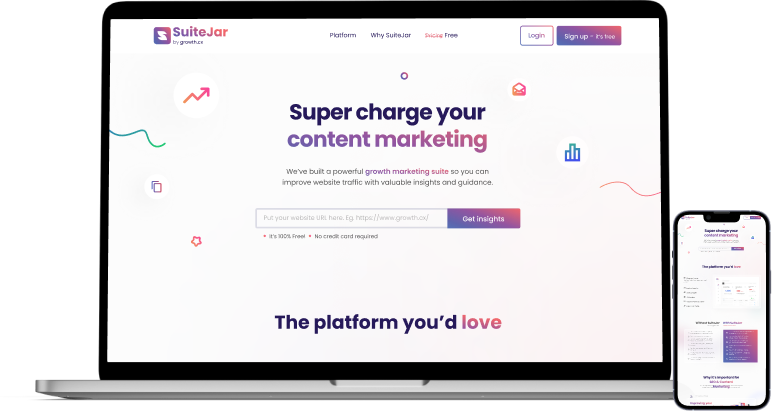
Key Services : Branding, Website UI, Content Marketing, Messaging, Positioning, Wordpress Development, SEO, LinkedIn Growth, Outbound Marketing.

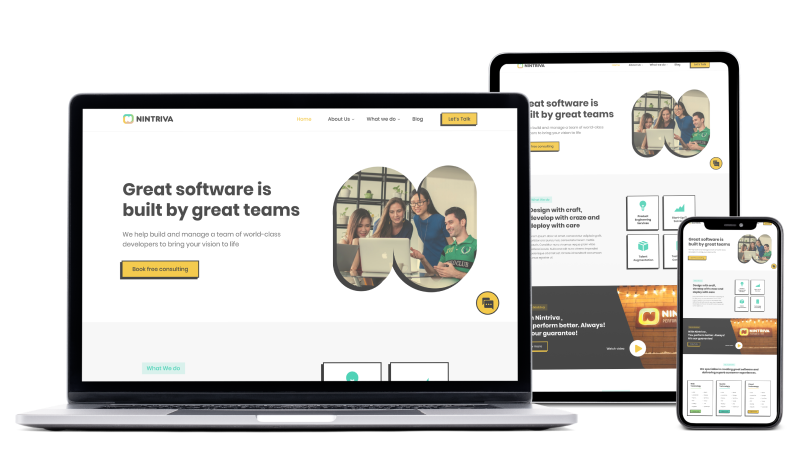
Key Services : Website UI, Content Marketing, Messaging, Positioning, Wordpress Development, SEO, LinkedIn Growth, Outbound Marketing

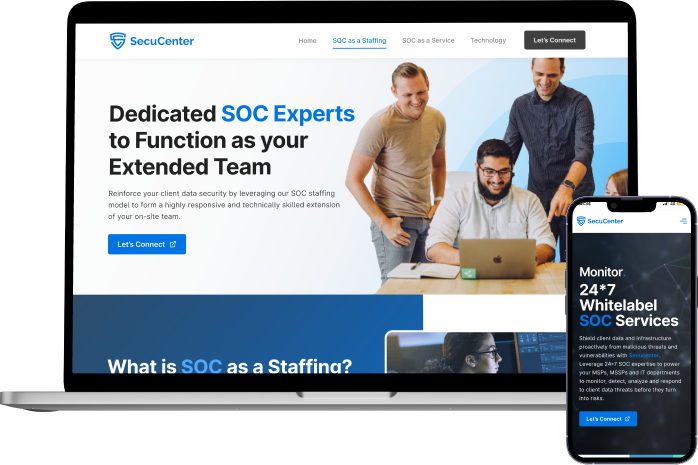
Key Services : Branding,Website UI, Content Marketing, Messaging, Positioning, Wordpress Development.