Growth-led SEO + CONTENT + SOCIAL MEDIA + PAID ADS Case Study
How growth.cx Helped Eloit build a Scalable Demand Engine Across Global Education Markets
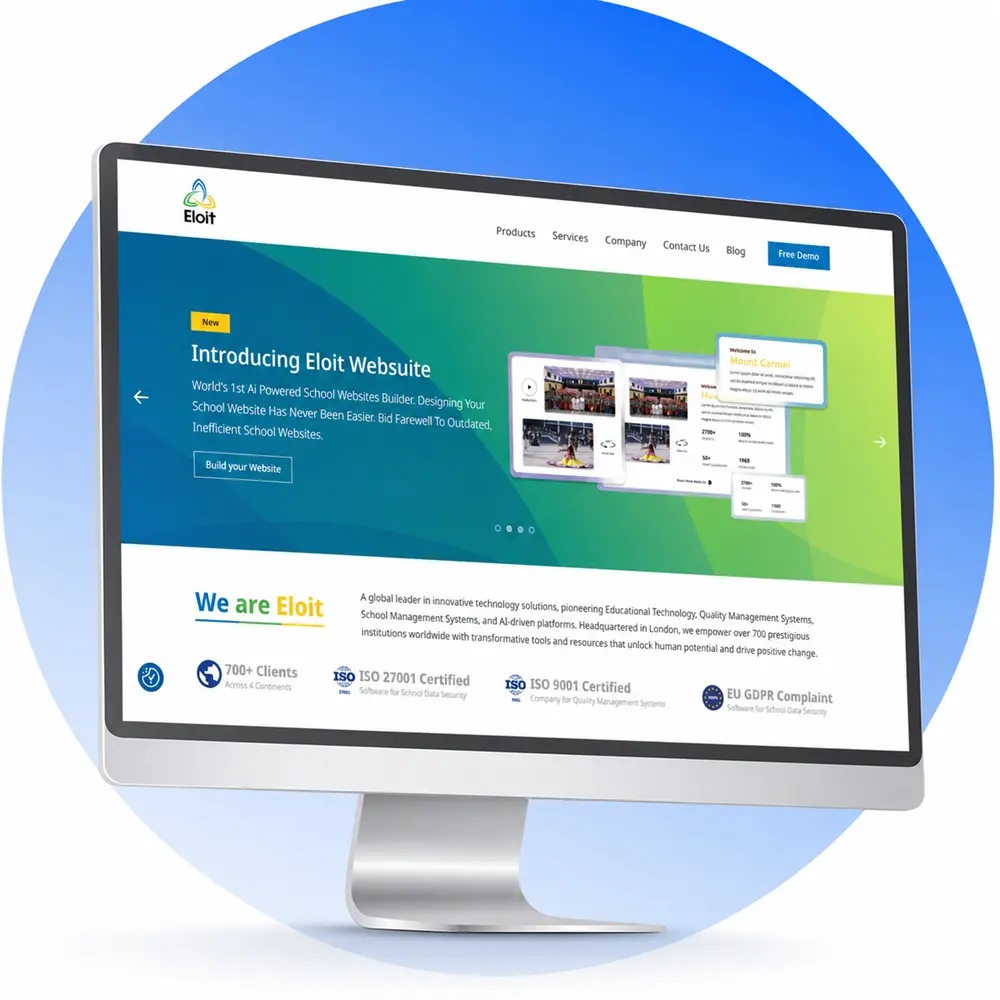
4x
Monthly qualified leads (11 → 44 per month)
4.7x
Non-branded organic clicks (410 → 1,840)
46%
Reduction in cost per lead ($48 → $25.80)
About Eloit
Eloit is a London-based EdTech company that helps schools, colleges, and care institutions. They run their operations on a single AI-powered platform. Its flagship product, Edisapp, covers attendance, examinations, communication, administration, and student engagement. The company is trusted by 700+ institutions across South Asia, the Middle East, Europe, and Africa.
Website :
eloit.comBusiness Type :
B2B SaaS / EdTech
Offices :
London, UK
Engagement:
5 months
Company size:
Mid-market & enterprise schools
Ideal Customer Profile :
Buyers: Principals, academic directors, ops heads
Regions: South Asia, Middle East, Europe, Africa
The Challenge
-
01
A proven product with a growth engine that wasn't keeping pace
By the time Eloit came to growth.cx, the product story was strong. Over 700 institutions trusted Edisapp. The platform had 510+ modules. The team had already built a global footprint across four continents. None of that was in question.
What wasn't working was the demand generation layer. Marketing wasn't producing a qualified pipeline at a rate that matched Eloit's vision. It was mainly about where the business wanted to go, and because attribution didn't exist. -
02
No search foundation for competitive categories
Edisapp was competing against established names like Classter, Fedena, and Teachmint for category-level keywords. But there were no topic clusters, no structured solution pages, and no content built around region-specific intent. Schools searching for ERP software in the UAE behave differently from institutions doing the same search in South Asia. That distinction wasn't reflected anywhere in the strategy.
-
03
Messaging led with modules, not decisions
510 modules are a real differentiator. But a school principal evaluating software isn't counting modules; they're asking whether it will reduce their staff's admin workload, whether it’ll improve how parents stay informed, and whether other schools they respect are using it. That angle was entirely absent from the website copy.
-
04
No attribution, no optimization lever
Paid, SEO, and email were each running independently with no shared measurement framework. Budget was being spent across channels, but there was no way to trace a demo request back to a specific keyword, campaign, or email sequence. Without that signal, there was nothing to optimize toward.
-
05
A complex buying committee with generic nurture
Selling a school ERP means convincing a principal, an IT head, and often a governing board, sometimes simultaneously. Each stakeholder has different objections and different criteria for a yes. The existing email sequences treated them all the same way, which is why response rates were flat.
The Audit
What a structured audit revealed across every channel
Before touching any live campaign, growth.cx ran a full-stack audit across SEO, messaging, paid media, and email. Here's what it found.
SEO and Website
Key solution pages had minimal organic visibility. Search terms like "school management software UAE" and "best school ERP for K-12" were sitting there as low-competition, high-intent opportunities with no content targeting them. There was no keyword strategy segmented by buyer stage or geography; the same content was expected to serve South Asian and Middle Eastern intent simultaneously, which it couldn't. Landing pages funneled traffic to the Edisapp homepage, which was feature-heavy enough to appeal to IT evaluators already in research mode, but converted school principals at a much lower rate. Only 6 keywords were ranking on page 1 across all tracked terms.
Messaging
The platform's capabilities came through clearly. What didn't come through was what those capabilities meant for a school leader's day-to-day reality. "510+ modules" and "your staff spend 40% less time on admin" are fundamentally different messages. It's like one lists what exists, the other explains why it matters. Only one of them starts a conversation. Beyond that, there was no differentiation between principal-facing, IT-facing, and board-facing content. Strong trust signals like certifications, regional compliance credentials, and peer institution names, existed but weren't being used where they would have mattered most.
Demand Generation
-
Leads from paid campaigns entered a single generic nurture sequence. They didn't know where they came from or what role they held. Campaign attribution was absent. So there was no way to connect a demo to a specific channel, ad, or piece of content. Marketing and sales operated without a shared pipeline target or a clear definition of what qualified a lead for handoff.
Our Strategy
Three phases: foundation, activation, scale
Rather than fixing each channel in isolation, growth.cx built a single demand engine designed to serve the full buyer journey, bring in the right decision-makers, give them content that matches where they are in their evaluation, nurture them through a buying process that often involves multiple stakeholders, and hand them off to sales as genuinely qualified opportunities.
Phase 1 : Building the Foundation
- ICP segmentation by region and institution type, because South Asian, Middle Eastern, and European buyers have meaningfully different behaviors and timelines
- Messaging framework rebuilt around school outcomes rather than platform features
- SEO opportunity mapping covering category keywords and region-specific long-tail terms
- Persona-specific landing page strategy replacing the homepage-first traffic flow
- Competitor positioning audit across Classter, Fedena, and Teachmint
Phase 2: Activating Demand
- Topic clusters built around school management, communication, administration, and student engagement
- Google and LinkedIn campaigns launched with persona-specific landing pages for each audience
- Retargeting strategy for visitors who engaged with key pages but didn't convert
- Role-specific email nurture sequences running independently for principals, IT heads, and governing board members
- An attribution framework was implemented across all channels, so every demo request could be traced back to its source
Phase 3: Scaling What Worked
- Keyword expansion into geo-specific categories and competitor comparison terms
- Conversion rate optimization on the highest-performing landing pages
- Budget reallocation toward proven audiences and ad formats
- Weekly performance reviews with structured A/B testing cycles
- SQL criteria tightened with the sales team to improve handoff quality
End Results
What 5 months of coordinated execution delivered
SEO and Organic
Google Ads
LinkedIn Ads
Email Automation
Pipeline Impact
LEARNINGS
What Worked
-
01
Outcome-focused messaging outperformed feature lists across every channel. Ads, landing pages, and email sequences that led with what school leaders would actually experience: less admin time, better parent communication, smoother operations, converted better than anything that led with product capabilities.
-
02
Long-tail, geo-specific SEO targeting attracted higher-intent prospects and faced significantly less competition than broad category terms. Searches like "school attendance software Middle East" and "best school ERP India" get visitors who were already close to a buying decision.
-
03
Splitting email sequences by role made a real difference. Once principals, IT heads, and governing board members received content tailored to their specific concerns, response rates improved materially compared to the previous single-sequence approach.
-
04
Trust signals placed early on landing pages, regional compliance certifications, named peer institutions, and customer testimonials that improved conversion rates. The same signals buried at the bottom of a page had no measurable effect.
-
05
Weekly performance reviews with structured test cycles meant every learning was compounded. What the team discovered in month 2 was actionable by month 3.
What We had to Rethink
-
Running unified paid campaigns across South Asia, the Middle East, and Europe in a single audience underperformed significantly. Buyer behavior, decision timelines, and price sensitivity varied enough between regions that geographic segmentation had to be rebuilt before paid performance improved.
-
Sending paid traffic to the Edisapp homepage generated volume but not quality. The feature-dense homepage worked well for IT evaluators already in research mode, but converted school principals at a fraction of the rate that institution-specific landing pages did once they were built.
-
Broad "school administrator" targeting on LinkedIn generated impressions but low-quality clicks. Layering on institution size and seniority filters reduced overall volume but doubled lead quality.

Case Studies


Key Services : Branding, Website UI, Content Marketing, Messaging, Positioning, Wordpress Development, SEO, LinkedIn Growth, Outbound Marketing.

Key Services : Website UI, Content Marketing, Messaging, Positioning, Wordpress Development, SEO, LinkedIn Growth, Outbound Marketing

Key Services : Branding,Website UI, Content Marketing, Messaging, Positioning, Wordpress Development.