AI tools like ChatGPT are no longer just cool gadgets but a knowledge base that people first turn to for answers.
Similarly, SaaS and B2B companies are adopting ChatGPTs, using them for everything from creating viral blog posts to crafting laser-focused Generative Engine Optimization(GEO) magic, turning their brands into unstoppable digital dynamos.
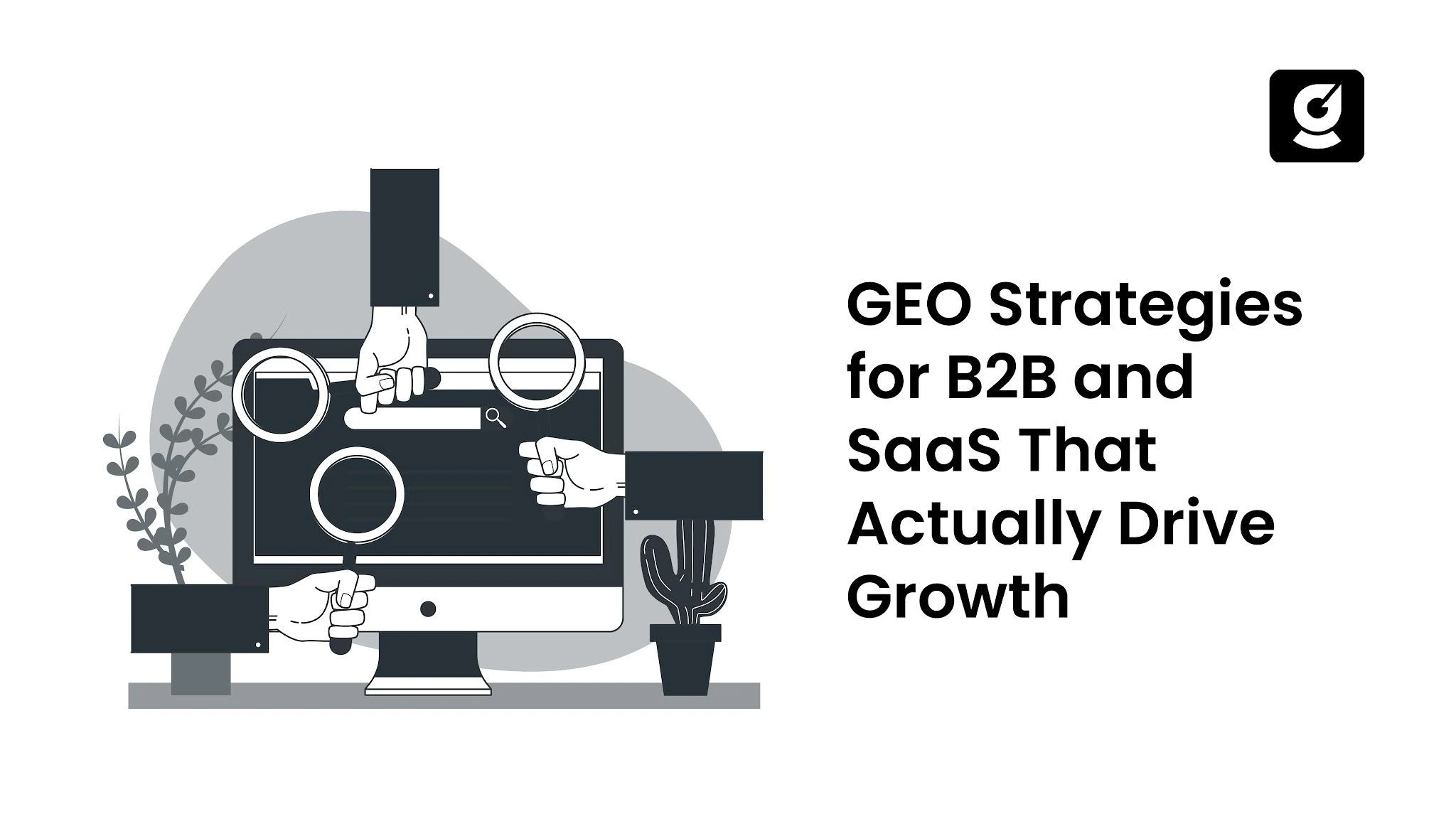
Now let’s talk about Generative Engine Optimization (GEO) strategies, which aim to make SaaS and B2B companies visible to ChatGPT and other generative AI platforms.
A traditional user gets his information from entering his query, a short, simple keyword. Then he finds his appropriate answer from search results consisting of ten blue links, where users would click, compare sites, and find their answers.
Why AI Search Optimization Is a Game-Changer for Your Business?
In contrast to this traditional approach, AI search works differently.
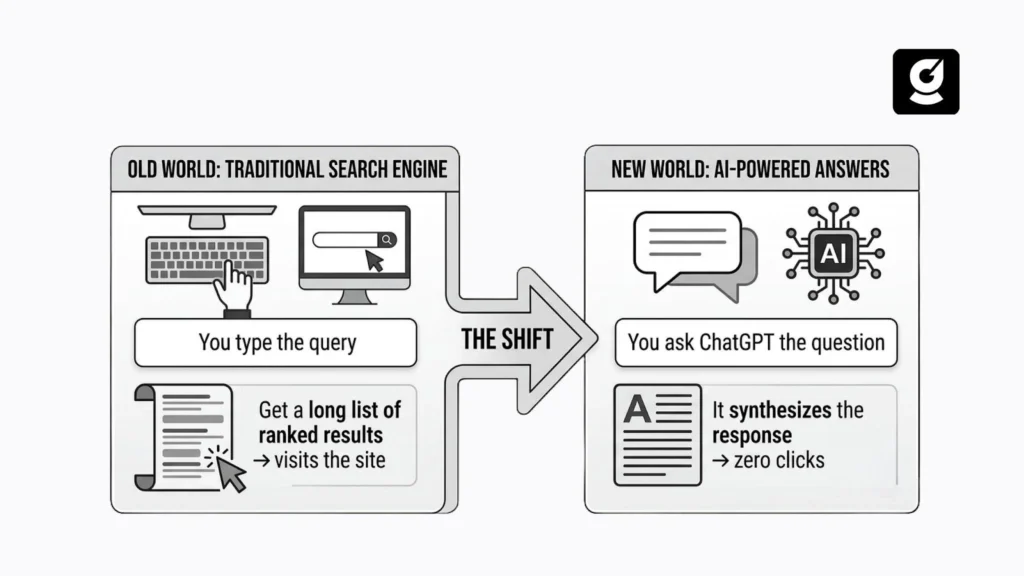
You are watching the slow process of how SEO changes to GEO.
For the last twenty years, we focused on getting traffic by being high on Google. That is SEO.
SEO was all about keywords, links, and keeping things clean on the technical side.
There is now a third player at the table: AI systems (ChatGPT SEO) that not only index the web but also combine it.
Gradually, these systems are the first thing a user sees when they want information.
The most important thing is that people don’t always click on anything when they ask ChatGPT a question. They find out. That changes everything about how to plan content.
Users ask a question and get a complete answer right away from many sources. For instance, if you want to find the best SaaS PR company, you can get recommendations, comparisons, and key features without leaving the platform. This evolution significantly impacts how visibility is built.
In short, SEO ensures search engines properly crawl our website, while GEO builds trust. Never consider these strategies to be competing with each other; rather, they complement each other.
SEO ranks your website based on strong content, strategic keywords, and high-quality backlinks. GEO boosts this by showing your brand to AI search engines and chatbots that need trustworthy sources.
By 2026, every SaaS and B2B company should understand that both GEO and SEO strategies will be essential for achieving comprehensive visibility.
You are in a good place if your SEO work is good. And GEO gives AI platforms the credibility signals they need to trust and talk about your brand.
SEO for AI search engines is very important.
Top 10 GEO Strategies Every SaaS and B2B Company Must Implement
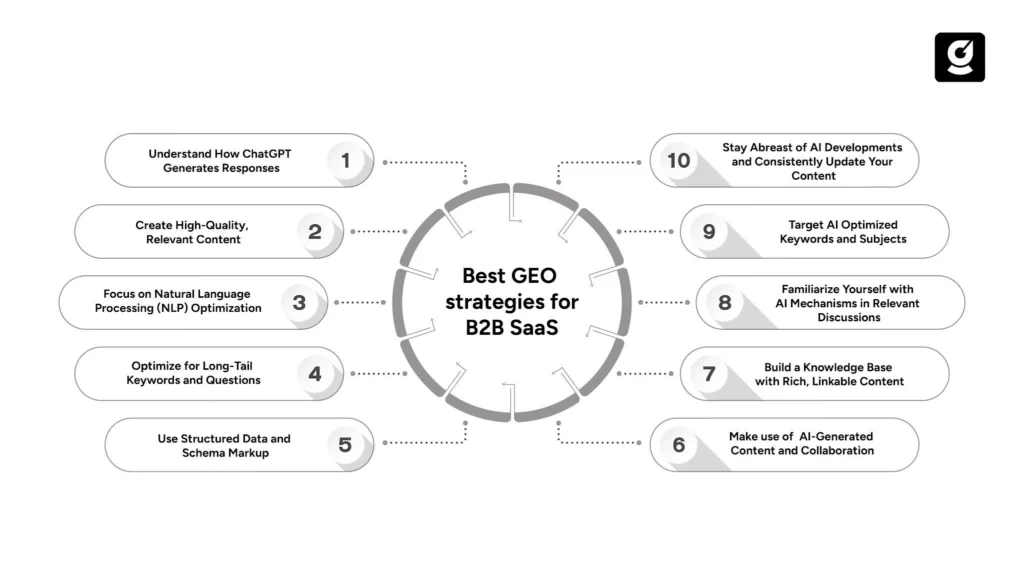
1. Understand How ChatGPT Generates Responses
ChatGPT operates using the GPT architecture. B2B organizations can leverage language modeling and fine-tuning as foundational steps to build tailored AI models that support business processes.
ChatGPT was developed using extensive text datasets, including
- Books
- Articles
- Web pages
OpenAI leveraged the Common Crawl dataset, an accessible and comprehensive collection of billions of web pages. This dataset is recognized as one of the largest in the industry.
2. Create High-Quality, Relevant Content
AI search visibility is projected to reach $108.88 billion by 2032. Google AI now supports billions of business-related queries each month, transforming how organizations access information.
Rather than using traditional, outdated processes, B2B decision-makers are adopting AI platforms to find solutions, evaluate products, and inform business strategies. For marketers, SEO experts, PR professionals, and business leaders, generative AI is now a critical component of high-impact B2B strategy.
It is estimated that over 70% of B2B organizations now use generative AI for content production, enabling marketing teams to publish 42% more content monthly. Tools such as Jasper and Search Atlas automate blog and social posts and handle SEO, enhancing output for B2B marketers.
What does it mean?
With advancements in generative artificial intelligence (Gen AI), natural language processing (NLP), machine learning (ML), and deep learning, B2B content creation has become more efficient and streamlined across the entire business funnel, from idea generation to content optimization, improving engagement with professional audiences.
3. Focus on Natural Language Processing (NLP) Optimization
In the era of machine learning and advanced algorithms, AI can understand and interpret a wide range of languages, including
- Slangs
- Colloquial terms
- idiomatic expressions.
Despite word-for-word translation, AI can also produce localized content that is accurate and culturally relevant, matching the target audience.
Businesses can reach more people in global markets with precision by translating and localizing their content. This makes content interesting and useful to people around the world, breaking down barriers and enhancing global connections.
4. Optimize for Long-Tail Keywords and Questions
As search engines become more sophisticated, long-tail keywords allow businesses to tap into niche markets by capturing specific user intent. Although they exhibit lower competition, this reflects a higher conversion potential due to their specificity, resulting in more qualified leads.
In generative AI searches, understanding nuanced human language is vital. Hence, including long-tail keywords in your search can greatly enhance algorithmic trend analysis of context and user needs.
It also helps deliver personalized search results that drive engagement and user satisfaction for those seeking specific information or products.
Incorporating a refined keyword strategy focused on long-tail phrases can enhance the company’s search visibility, aligning with consumer behavior trends in which detailed inquiries drive purchase decisions in an AI-centric digital ecosystem.
5. Use Structured Data and Schema Markup
When data is structured correctly, machine processing becomes simplified. Relying on traditional crawlers can lead to outdated processing, as traditional algorithms rely on surface-level features and may misinterpret meaning.
To achieve this, you can add semantic tags from schema.org, which are guidelines to help search engines and other tools understand the purpose of your content by labeling the code on your web pages.
For example, you can label your content to help search engines understand the structure of your content, including:
- Questions
- Answers
- Steps in a how-to guide
- Products and Reviews.
Marking a section of your site as an FAQ page helps AI recognize these as questions and provide short answers; this aligns perfectly with how people search for information.
How-to schemas provide instructions in a step-by-step manner and help AI reduce the guesswork in your content, thereby increasing the chances of your content being used in AI-generated snippets.
6. Make use of AI-Generated Content and Collaboration
Leveraging AI-generated content and collaboration in professional settings enhances workflows, drives innovation, and boosts productivity.
Integrate advanced AI into content creation to automate routine tasks such as reports and marketing materials. This helps people focus on strategic work that needs judgment and creativity.
Best practices for using AI in marketing include folding AI smoothly into workflows. Avoid changing your business goals. To make your marketing strategy more balanced, avoid common mistakes such as over-relying on automation and ignoring human input.
7. Build a Knowledge Base with Rich, Linkable Content
Being a visionary in creating content that attracts links increases your website’s visibility and authority, leading to more visitors and potential customers. Use diverse content types, such as checklists, original research, and guides. A broad range of audiences is waiting for you and encourages you to share.
8. Familiarize Yourself with AI Mechanisms in Relevant Discussions
An increasing number of small businesses are adopting AI tools to help formulate advertisements, analyze data, conduct personalized email marketing, optimize localized SEO, etc.
These mechanisms enable small businesses to personally contact their consumers, enabling them to compete effectively with larger businesses and convert online consumers into local purchasers.
To conclude, AI is no longer limited to large firms; with the adoption of AI tools, small businesses can accelerate growth, make decisions more effectively, and enhance their customer relations.
9. Target AI Optimized Keywords and Subjects
Targeting AI-optimized keywords and Subjects involves configuring online content in ways preferred by AI mechanisms, such as search engines and chatbots, so that it can be promoted and recommended to the target audience.
When writing online content, AI-optimized search visibility is achieved when AI mechanisms effortlessly help users understand the services your business offers.
How does one identify AI-optimized keywords?
AI-Optimized Keywords are value determinants for AI mechanisms, as they reflect the reality that a real person is behind the search. AI mechanisms seek to identify the real-world words that people use in formulating search queries or requesting information.
To achieve AI search visibility, a keyword search of the content must include AI-optimized keywords. Greater use of AI-optimized keywords (such as “how to start a YouTube channel for beginners” = “YouTube tips”) increases the likelihood that AI will select the content as an appropriate response.
When a business uses AI‑friendly keywords and topics, AI‑powered tools start tracking:
- How often do those keywords show up on the business website or social pages?
- How often do people ask AI questions about that business or click on it?
- How the business ranks compared with competitors for the same topics
This tracking provides businesses with insights into
- Which topics and keywords are most effective for them?
- Understand what competitors are doing better.
These insights guide decisions about future content or product offerings, such as producing more videos, blog posts, or products on trending topics.
10. Stay ahead of AI Developments and Consistently Update Your Content
To boost your chances of being included in ChatGPT’s Content, you’ll need to constantly adjust your content to follow the AI development cycle and the content consumption fads of users.
What’s the best strategy to spot new AI-related fads?
Search the most recent AI topics being explored via ChatGPT. Questions such as, “How to make money online?” “AI-friendly YouTube scripts,” or “how to study better with AI.
If AI-related queries are prevalent within your target audience’s niche (say, gaming, coding, or study tips), go ahead and create content that addresses them in an easy-to-understand, detailed way.
How to Get Your Content Cited by ChatGPT and Other AI Tools
ChatGPT pulls information from real websites, blogs, and articles online. Websites and blogs that go out of date or fail to answer the questions users ask ChatGPT are less likely to be referenced by ChatGPT.
User-fueled AI content retrieval systems and the public favor new findings and ideas that evolve from research and society.
Keeping your blog, YouTube description, and personal portfolio up to date with new questions, examples, and clear explanations encourages others to update their content. As a result, ChatGPT values its content, marks it as relevant and new, and is more likely to mention or recommend it.
Wrapping Up
The 10 GEO strategies we talked about provide an opportunity to be the most visible among other strategies, showcase the best of your brand, and build brand awareness, authority, and credibility in the most competitive markets.
The right GEO strategies increase the likelihood of being mentioned, cited, or recommended by AI. This approach maximizes reach and brand visibility over time, as more generative AI is utilized.
Would you still like to know the answers to these questions?
- How can I improve my rank in AI search results?
- How can I improve my content’s SEO?
- How can I improve my website optimization for ChatGPT?
This is exactly what growth.cx offers SaaS marketing agency services. We help you implement GEO strategies tailored to your SaaS or B2B company, simplify your optimization journey, and position your brand for recognition by generative AI platforms like ChatGPT.

FAQs
How does ChatGPT choose which websites to mention?
A website is more likely to be referenced when it appears on trusted, authoritative platforms and when its content effectively addresses real-world questions.
Why is GEO important for SaaS and B2B companies?
GEO is important for SaaS and B2B companies as it focuses on generating content based on user intent and context. Instead of just changing keywords or backlinks, GEO helps the AI better understand user intent and tailor the content accordingly.
What is the difference between GEO and traditional SEO?
Traditional SEO focuses on improving a website's visibility in search engine results, such as those on Google. GEO, however, is distinct in that it aims to ensure your content is recognized and used by AI-powered search tools such as ChatGPT, Google Gemini, Bing Copilot, and other similar platforms.
How can SaaS companies get mentioned by ChatGPT?
SaaS companies should ensure that ChatGPT can reference their blogs, news articles, and case studies. Additionally, collaborating with others and participating in open-source projects can increase visibility on community platforms, where AI discussions often occur.
What type of content works best for AI search engines?
Structured, scannable content works best for AI search engines like ChatGPT. Top Formats like:
- Comparisons and "vs" tables (e.g., Tool A vs. Tool B) for clear reasoning.
- Lists like "top 10" or rankings for easy citation.
- Step-by-step guides, FAQs, and how-tos matching user queries.
How can B2B companies optimize their websites for AI search?
AI models prefer content that directly answers questions. Switch to answer-worthy content formats, such as FAQ sections and step-by-step guides. Well-structured content uses clear headings, bullet points, and structured data to make your content easy for AI to parse.
What role does brand authority play in GEO?
Brand authority is essential because AI relies on direct and specific content to recognize a brand as a reliable source. In GEO, authority is often measured by whether a model references the brand, even if the user doesn’t visit the website.