FREE GUIDE
AI SEO: The Complete Guide to Generative Engine Optimisation (GEO)
What is AI SEO, how is it different from traditional SEO, and what exact strategies do you need to rank in AI-powered search engines in 2026? This guide breaks it all down.
Summary
Search is no longer a list of blue links.
In 2026, AI-powered engines from Google's AI Overviews to ChatGPT Search and Perplexity are answering queries directly, reshaping the entire meaning of "ranking." AI SEO is the practice of optimising your content and technical infrastructure to be selected, cited, and surfaced by these generative AI systems.
It combines traditional SEO best practices with new disciplines like Generative Engine Optimisation (GEO) and Answer Engine Optimisation (AEO), and it is now the most critical lever for sustainable organic visibility.
60%
of Google searches now end without a click due to AI-generated answers (zero-click searches)
#0
AI Overview "position zero" is now more coveted than the traditional #1 organic result
This guide explains what AI SEO is, how Generative Engine Optimisation differs from traditional methods, the core strategies your brand needs, and what the future holds for search visibility.
What Is AI SEO?
AI SEO is the practice of optimising websites, content, and digital assets specifically for AI-powered search systems. This includes Google's Gemini-driven AI Overviews, Bing Copilot, Perplexity, ChatGPT Search, and other generative AI platforms that answer rather than simply listing URLs.
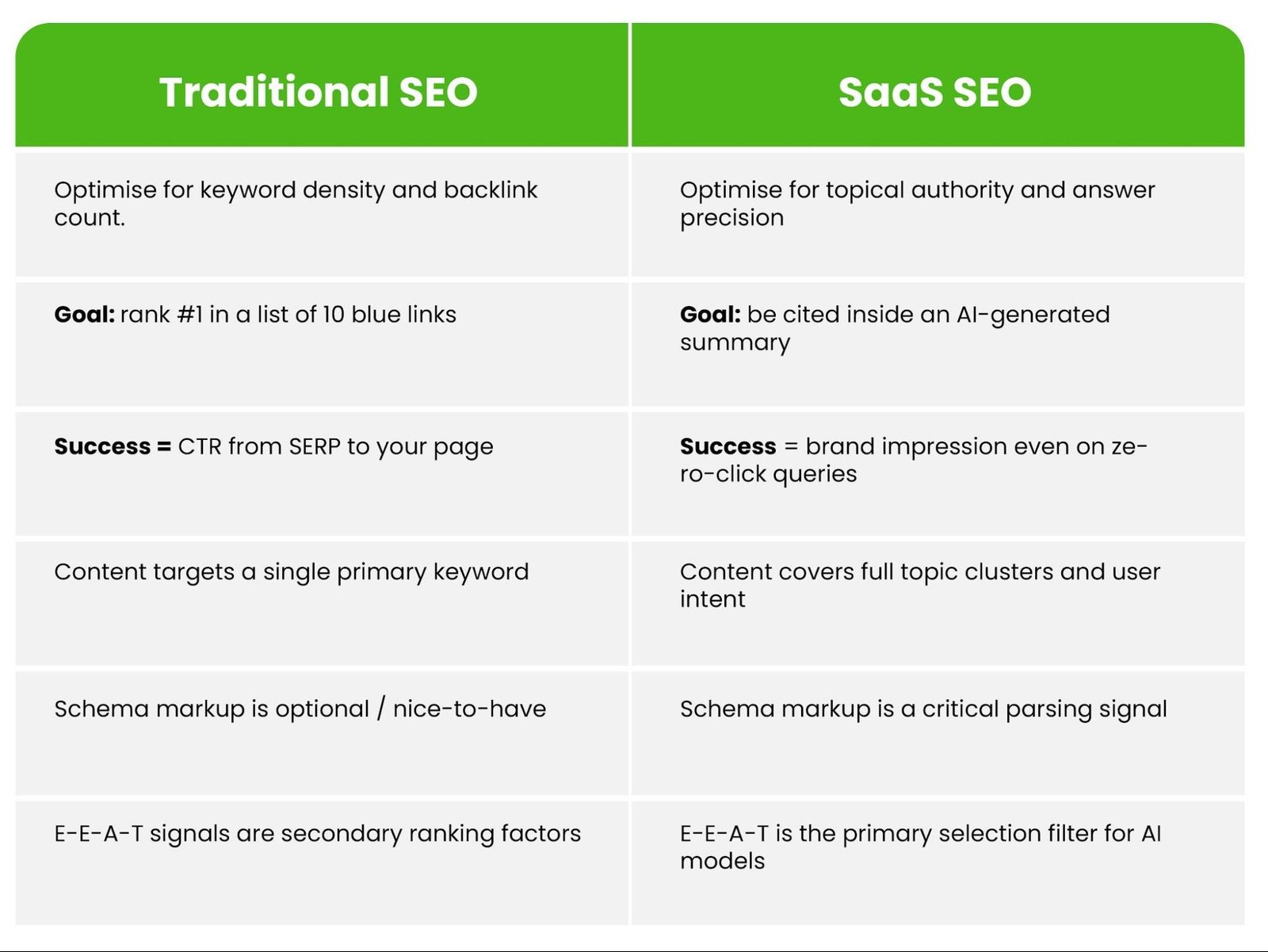
While traditional SEO focuses on ranking a webpage in a list of results, AI SEO focuses on making your content the trusted source material that AI systems draw from when generating their answers. With this, you're optimising for an AI model that reads thousands of pages and selects the most credible, well-structured, and authoritative response to quote or paraphrase.
Traditional SEO vs. AI SEO: What's Changed
What Is GEO in SEO? Generative Engine Optimisation Explained
Generative Engine Optimisation (GEO), sometimes called geo seo is a subset of AI SEO. This focuses specifically on optimising content to be retrieved and synthesised by generative AI models. While traditional SEO targets search algorithms' ranking signals, GEO targets the retrieval and generation processes of large language models (LLMs).
When you ask a question on Perplexity or use ChatGPT's search mode, the AI reads multiple sources in real time and constructs an original answer. GEO is the discipline of ensuring your content is the source material that gets read, trusted, and quoted in that generated answer.
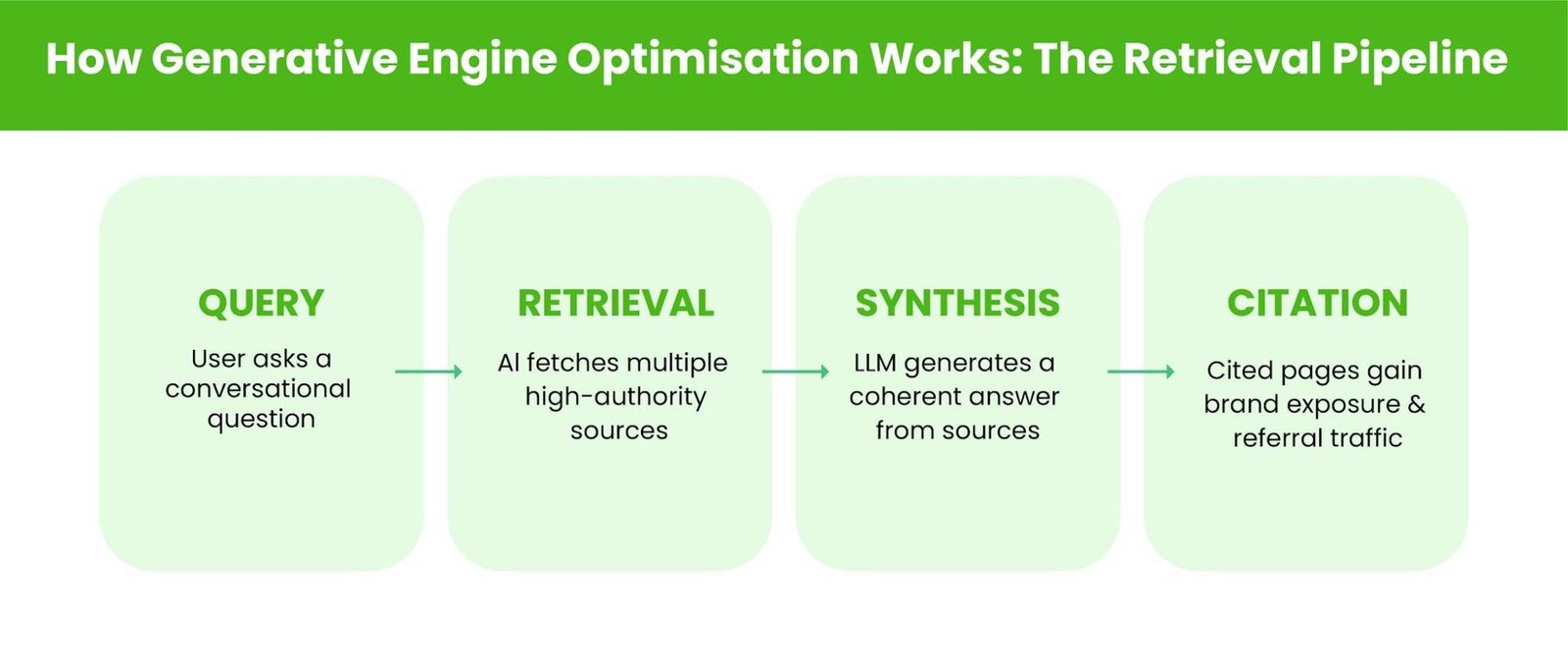
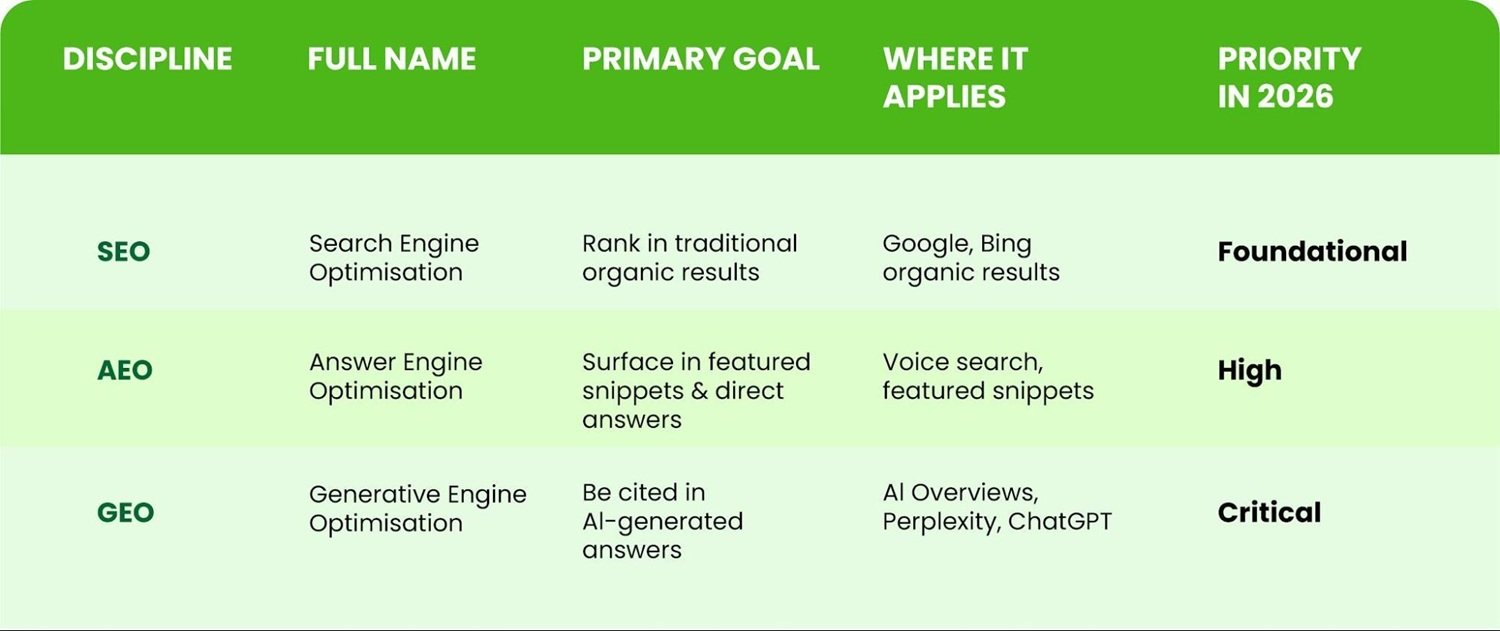
GEO vs. AEO vs. SEO: Understanding the Hierarchy
These three disciplines are complementary, not competing. Think of them as nested layers of the same optimisation effort:
What Is AI Analytics and Why Does It Matter for GEO?
AI analytics refers to using artificial intelligence to analyse your site's search performance, predict content gaps, identify which queries trigger AI Overviews, and measure citation rates across generative platforms.
AI analytics helps you understand why your content is or isn't being retrieved by AI systems and what to do about it.
Platforms like SEMrush, Ahrefs, and emerging GEO-specific tools now track AI Overview citations, monitor generative search features, and surface opportunities where your content is one structural improvement away from being selected as a source.
Core AI SEO Strategies for 2026
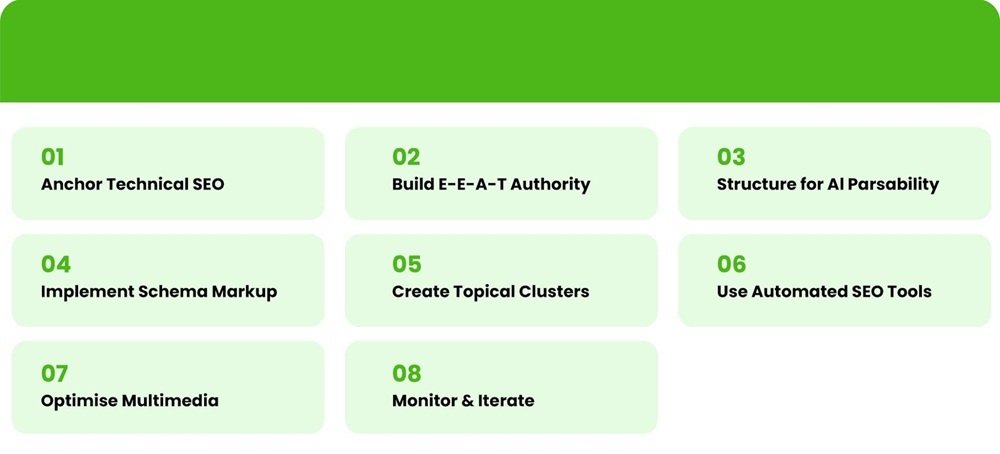
Here are the eight proven strategies for AI SEO optimization, drawn from the latest research on what generative AI systems select as source material.
- Core Web Vitals pass: LCP under 2.5s, INP under 200ms, CLS under 0.1
- HTTPS secured and all internal links consistent
- Mobile-first design and responsive layout across all breakpoints
- Clean XML sitemap submitted to Google Search Console
- Crawl budget managed: remove or noindex thin/duplicate pages
- Structured data implemented correctly and validated with the Rich Results Test
- No orphaned pages, all content in logical internal link hierarchy
-
Anchor Your AI SEO in Technical Fundamentals
No AI SEO strategy succeeds without a technically healthy website. Generative AI systems rely on Google's crawling and indexing infrastructure to discover and evaluate content. If Google can't crawl your page efficiently, neither can the AI systems that depend on Google's index.
Technical health checklist for AI SEO
- Core Web Vitals pass: LCP under 2.5s, INP under 200ms, CLS under 0.1
- HTTPS secured and all internal links consistent
- Mobile-first design and responsive layout across all breakpoints
- Clean XML sitemap submitted to Google Search Console
- Crawl budget managed: remove or noindex thin/duplicate pages
- Structured data implemented correctly and validated with the Rich Results Test
- No orphaned pages, all content in logical internal link hierarchy
-
Build Genuine E-E-A-T Authority
E-E-A-T (Experience, Expertise, Authoritativeness, Trustworthiness) is the single most important selection filter for AI models. When a generative AI evaluates thousands of pages as potential sources, it places heavy weight on authority signals because the model is effectively choosing who to "quote" in its answer to a user.
Building E-E-A-T for AI SEO means going beyond author bio boxes. It requires a coherent, cross-web presence that consistently signals expertise: original research, cited statistics, first-person case studies, expert author credentials, and a track record of being referenced by other authoritative sources.
E-E-A-T Signals That Influence AI Selection
On-Page Signals Off-Page Signals Named, credentialled author with bio page Backlinks from editorial and industry publications First-person experience described in the content Brand mentions in Reddit, Quora, and forums Original data, studies, or case studies cited Positive, recent reviews on G2, Capterra, Trustpilot Recent publication and update dates are visible Author cited or quoted in third-party content Links to authoritative external sources Wikipedia or knowledge graph mentions -
Structure Content for AI Parsability
AI systems parse content structurally before evaluating it semantically. Pages with a clear heading hierarchy (H1 → H2 → H3), front-loaded answers, and scannable formatting are significantly more likely to be extracted and cited than pages with equivalent information.
The key technique is answer-first writing: every section opens with a 40–60-word direct answer to the implicit question signaled by the heading.
Supporting evidence, context, and examples follow. This mirrors how AI models retrieve and present information; they identify the most concise, accurate answer first, then pull surrounding context as needed.
Content structure rules for GEO
- Open every H2 section with a direct 40–60-word answer
- Use question-format headings: "What is GEO in SEO?" not "GEO Overview"
- Use bullet points and numbered lists for multi-part answers
- Include a TL;DR or summary box at the top of long articles
- Add comparison tables for "X vs Y" queries
- Keep paragraphs to 3–4 sentences maximum for readability and extraction
- Use bold text to highlight key facts that could stand alone as a cited snippet
-
Implement Schema Markup Strategically
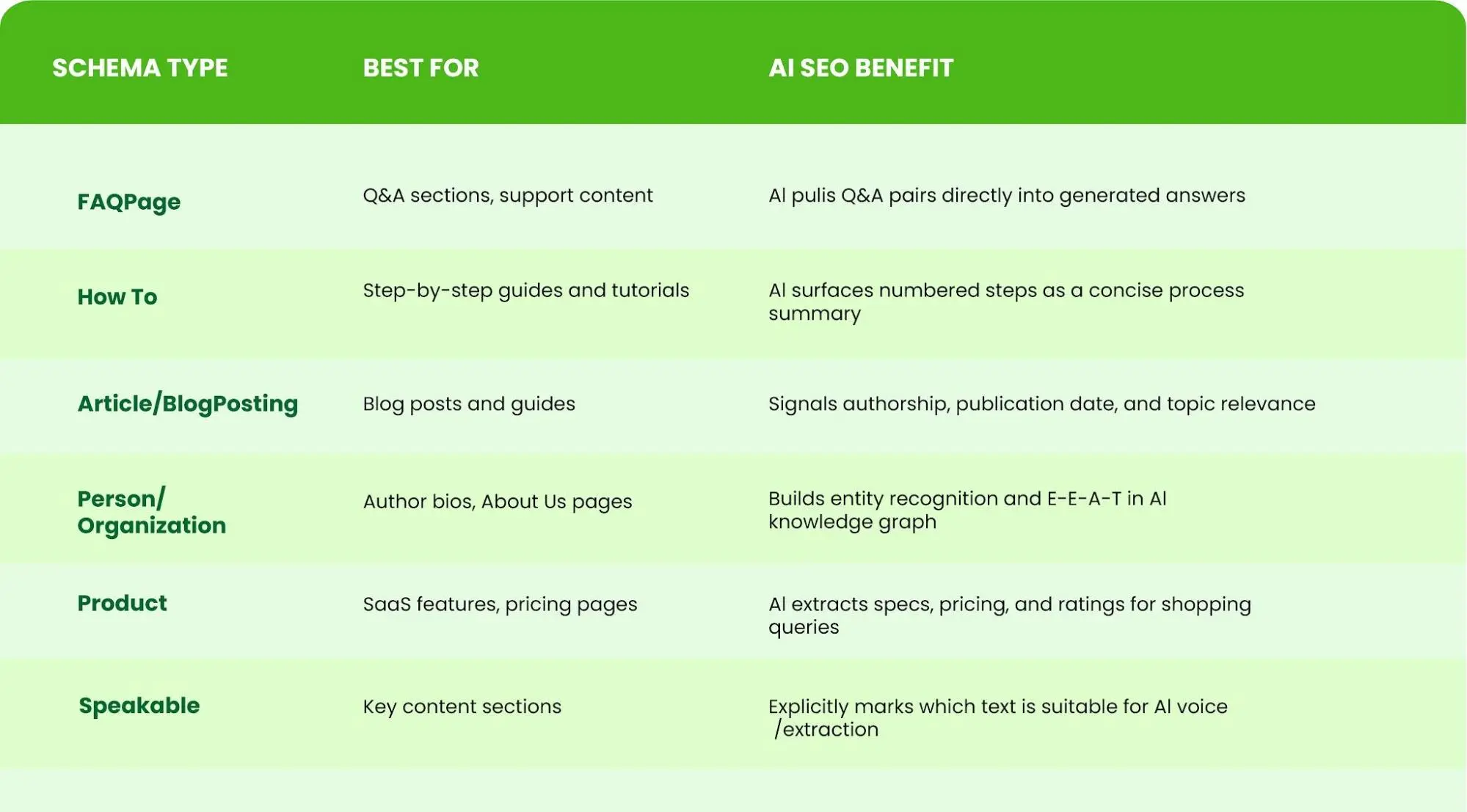
Schema markup is the structured vocabulary that tells AI systems what your content is about, who created it, and what type of entity it describes. At the same time, schema has become a critical selection signal in AI SEO because it allows AI models to parse your content without relying on contextual inference.
-
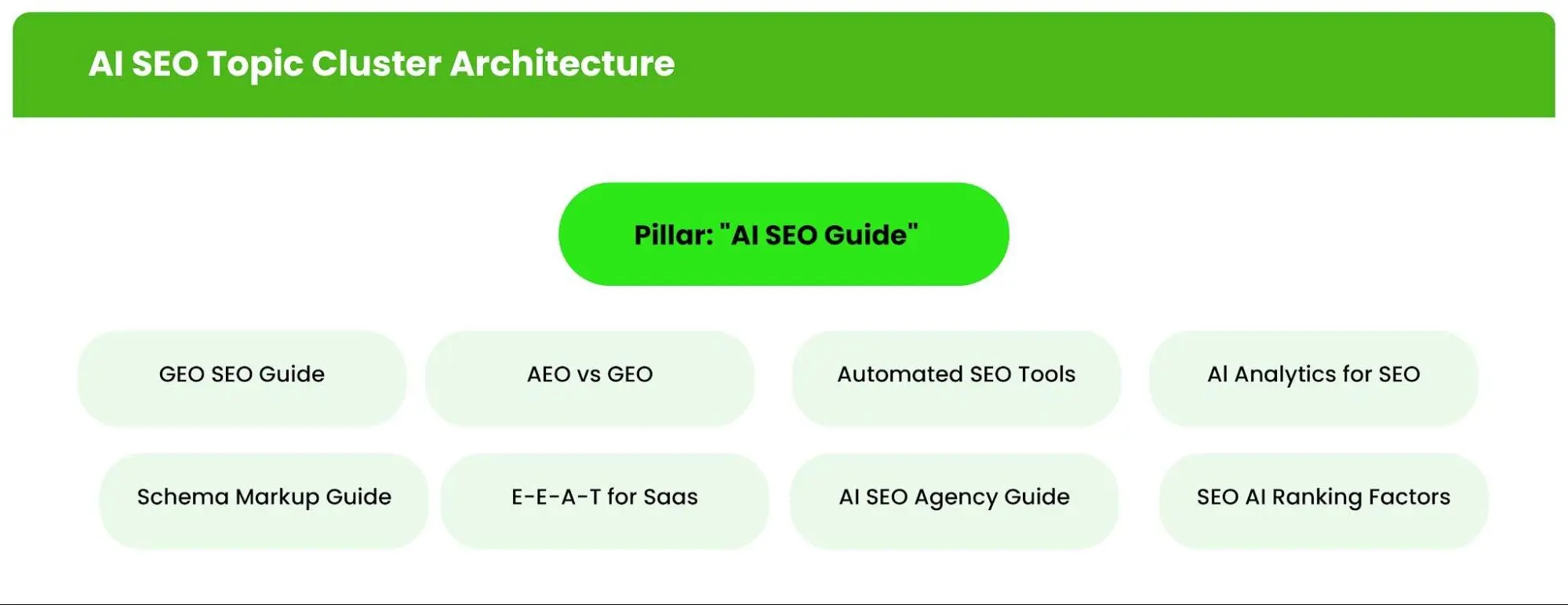
Build Topical Authority Through Content Clusters
AI retrieval systems weigh domain-level topical authority as heavily as individual page quality.
A website that publishes one excellent article on "what is AI SEO" is far less likely to be cited than a website with a comprehensive cluster of interconnected content on AI SEO, GEO, AEO, automated SEO optimisation, AI analytics, and related subtopics.
The reason is straightforward: when an AI model selects a source, it is effectively vouching for that source's expertise to a user. It preferentially selects sources that demonstrate comprehensive, sustained expertise rather than one-off content.
-
Leverage Automated SEO Optimization Tools
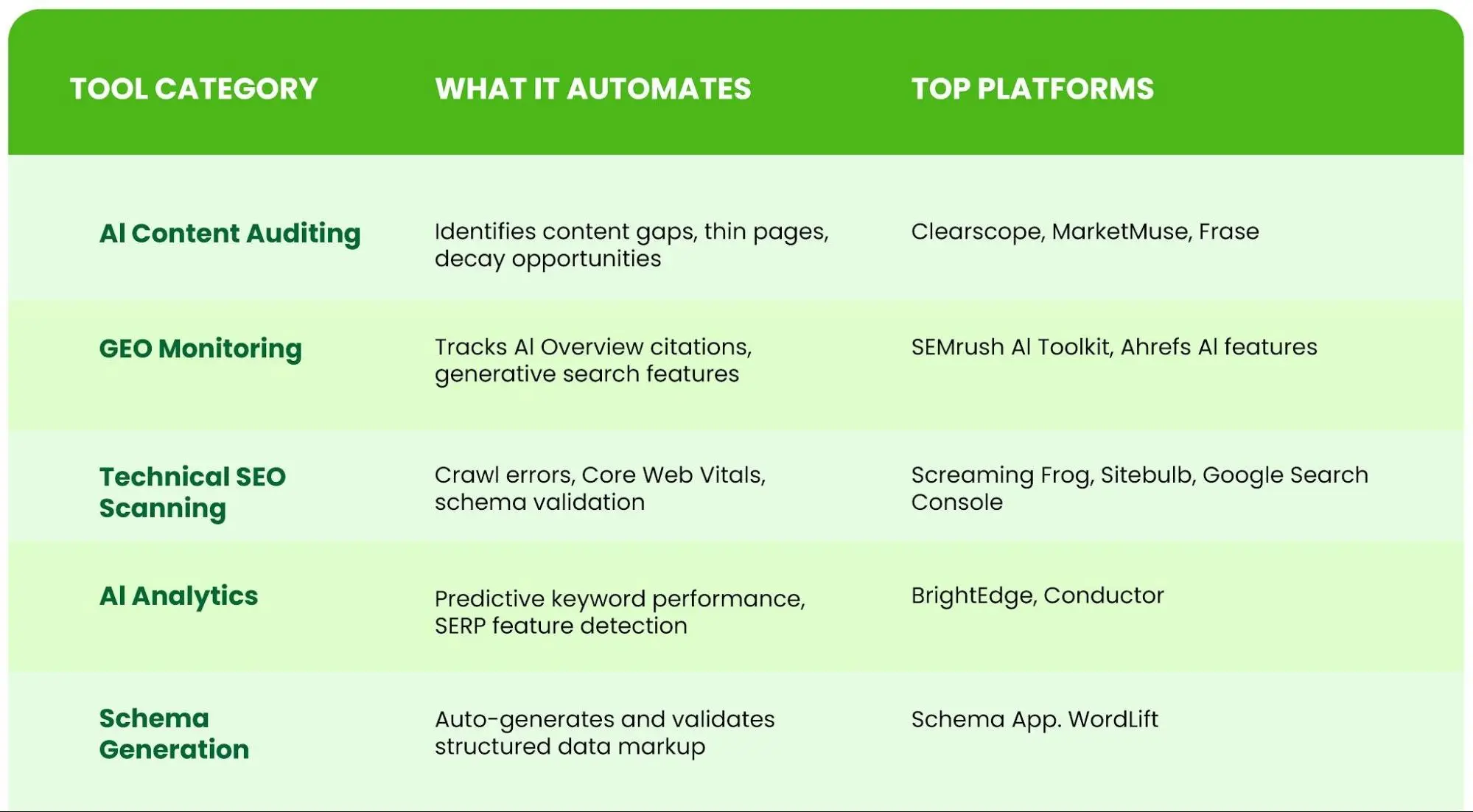
Automated SEO optimisation uses AI-powered software to identify opportunities, audit existing content, flag technical issues, and recommend improvements at a scale that human teams cannot manually match.
For brands publishing hundreds of pages, automation is the only way to maintain consistent AI-readiness across the entire content library.
The role of the AI SEO strategist has evolved accordingly. The strategist now directs automated tools, interprets their outputs, and sets optimisation priorities. It ensures the human-layer creativity, brand voice, and genuine expertise remain central to content production.
-
Optimise Multimedia for AI Extraction
AI Overviews and generative answers increasingly incorporate images, tables, and visual elements extracted directly from source pages. Pages that include well-structured visual content, comparison tables, step-by-step diagrams, and annotated screenshots are disproportionately likely to be featured. These elements provide immediate value that plain text cannot.
Multimedia optimisation for AI SEO
- Every image must have descriptive alt text (describe what the image shows, not just "image of X")
- Include at least one comparison table per pillar page; AI models extract these directly.
- Use infographics that summarise key data points with clearly labeled axes and values.s
- Compress images for fast load without quality loss (WebP format preferred)
- Add captions to complex images. AI systems can use captions as summary text
- Where possible, add transcripts for video content so text is indexable
-
Monitor AI Citation Performance and Iterate
AI SEO optimisation is not a one-time project. AI Overview citations shift with algorithm updates, content freshness, and changes in query patterns. Brands that maintain strong AI visibility treat monitoring as an ongoing operational discipline, not a quarterly audit.
Monthly AI SEO Monitoring Checklist
- Check Google Search Console for queries with high impressions and low CTR, indicating AI Overview interference.
- Track which target keywords trigger AI Overviews (use SEMrush or Ahrefs AI features)
- Verify which pages are currently being cited in AI Overviews for your key topics
- Run competitor citation analysis, who is being cited instead of you, and why
- Audit content freshness: update statistics, dates, and examples on any page older than 6 months
- Review schema markup for errors using Google's Rich Results Test
- Monitor brand mentions on Reddit, Quora, and forums to understand E-E-A-T signal health
- Check AI analytics dashboards for emerging keyword opportunities in your topic cluster
SEO vs AI Optimisation: Which Should You Prioritise?
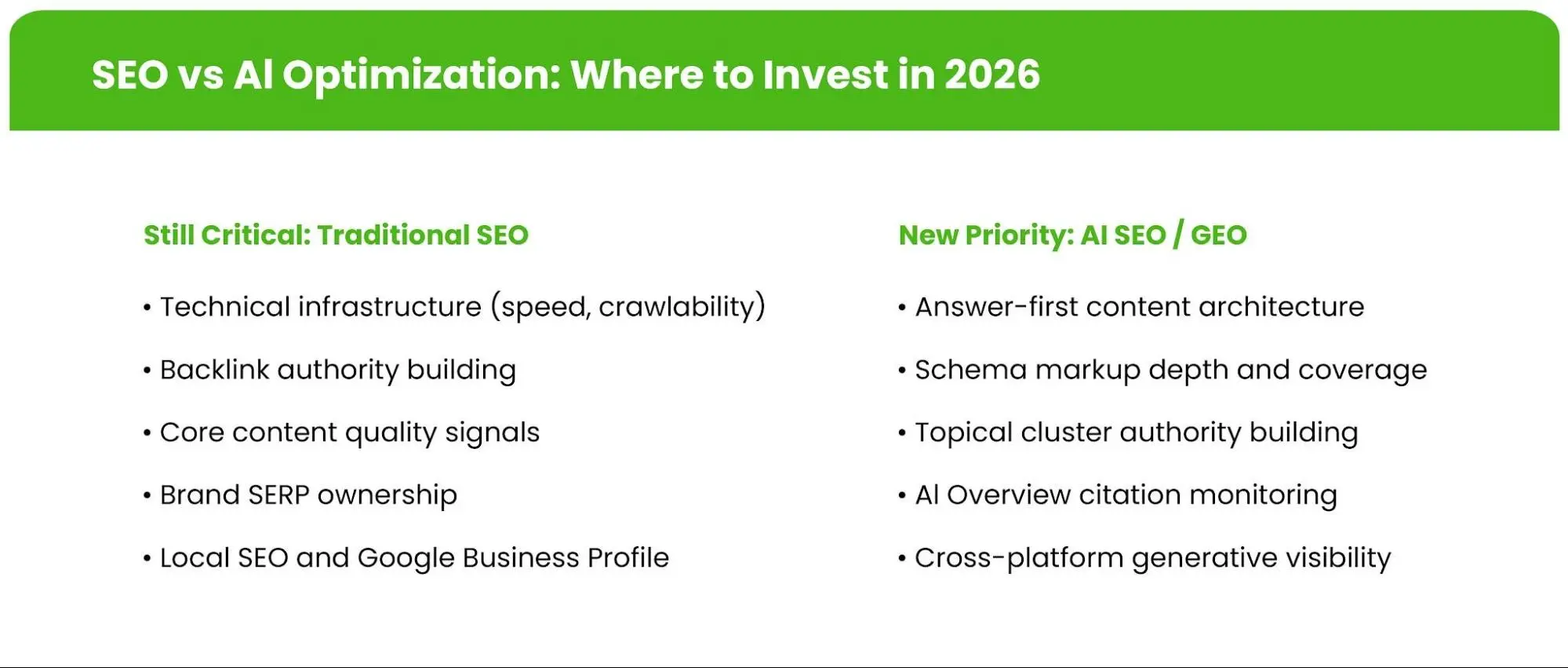
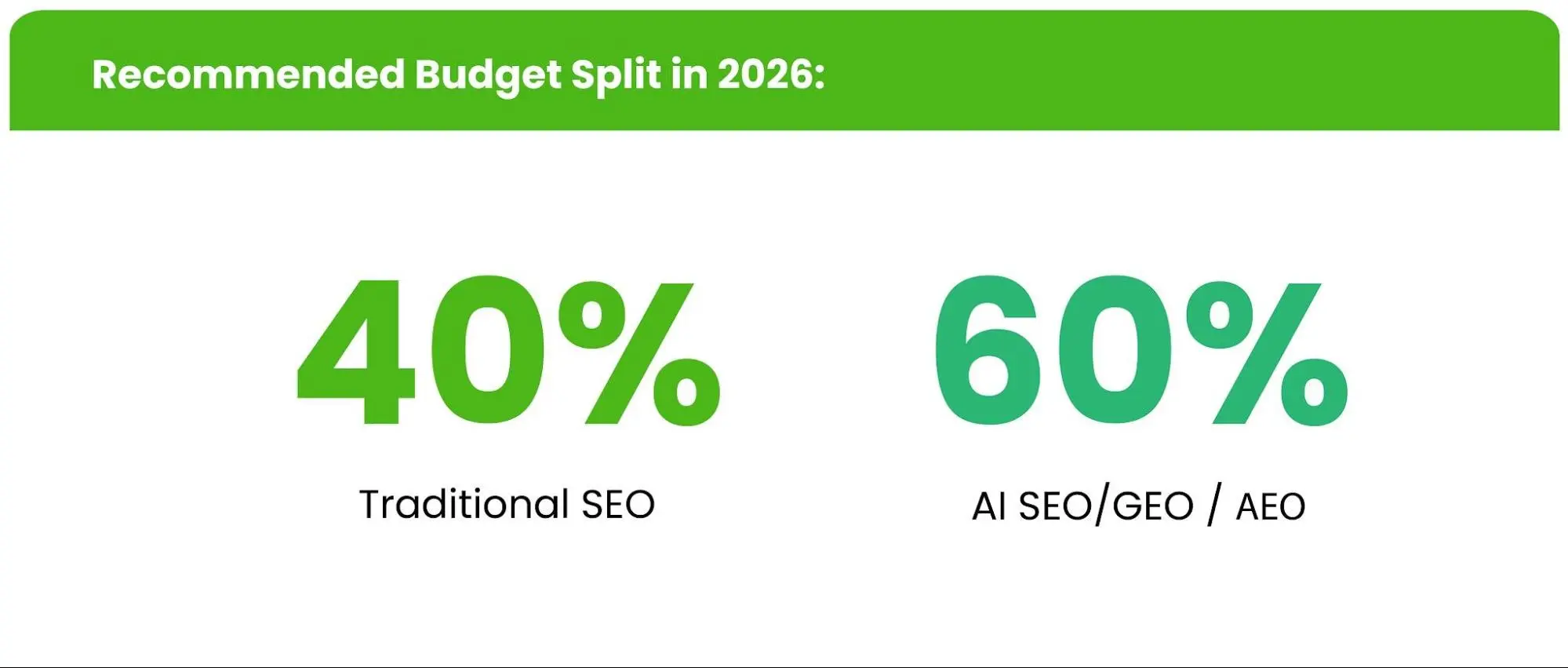
One of the most common questions brands face in 2026 is whether to prioritise traditional SEO or shift resources to AI SEO optimisation.
The answer is: they are not in opposition. The better question is how to balance and sequence your investment between them.
Traditional SEO remains essential for building the authority and technical infrastructure that AI systems depend on. But a strategy that optimises exclusively for traditional ranking without accounting for GEO and generative retrieval will progressively lose share of voice in search as AI Overviews absorb an increasing proportion of user attention.
Do You Need an AI SEO Agency?
As AI SEO optimisation has grown in complexity, a new category of specialist has emerged: the AI SEO agency and the AI SEO strategist.
These specialists combine deep knowledge of generative AI retrieval mechanics, structured data, content strategy, and traditional SEO.
For SaaS companies and B2B brands, partnering with an AI SEO agency is often the fastest path to GEO results. These specialists have already built the monitoring infrastructure, tested the optimisation techniques, and accumulated pattern recognition from working across dozens of sites and verticals simultaneously.
- When to Hire an AI SEO Agency
You're not currently appearing in AI Overviews for any target queries; your organic traffic has declined despite stable rankings; you lack in-house GEO expertise or time for consistent monitoring.
- What a Good AI SEO Agency Delivers
A complete GEO audit, topic cluster architecture, schema implementation, content restructuring, AI citation tracking dashboards, and monthly performance reporting tied to business outcomes.
- What to Look For
Proven citation examples from client sites, familiarity with Perplexity and ChatGPT optimisation (not just Google), transparent reporting on AI SEO ranking metrics, and a content-first (not just technical) approach.
At growth.cx, our team of AI SEO strategists has helped SaaS companies achieve consistent AI Overview citations within 90 days. We use a proven combination of content cluster architecture, schema automation, and E-E-A-T authority building. We specialise exclusively in SaaS and B2B, which means our GEO strategies are built for high-consideration, long-cycle buying journeys where brand credibility matters most.
The Future of AI SEO
The generative search is changing faster than any previous shift in search history, including the move from desktop to mobile, or the introduction of HTTPS as a ranking signal. Brands that build adaptive AI SEO strategies now will compound their advantage significantly over the next 24–36 months.
- Multi-Modal AI Answers
AI systems will increasingly combine text, image, video, and audio in generated answers. Brands that invest in multi-format content today videos, infographics, podcasts, and interactive tools, will be positioned for multi-modal retrieval. - Agent-Based Search
AI agents that autonomously browse the web to complete tasks will rely even more heavily on structured, trustworthy, machine-readable content. GEO for agents will require even more rigorous schema and factual precision. - Real-Time Freshness
AI systems will increasingly prefer content with verified recency signals. Content decay will accelerate static pages will lose citation frequency faster than ever, making continuous content refresh a competitive necessity. - Cross-Platform GEO
Perplexity, ChatGPT, Gemini, Claude, and emerging regional AI assistants each have slightly different retrieval preferences. Cross-platform GEO optimising for multiple AI engines simultaneously will become its own discipline. - Personalised AI Results
AI systems will increasingly personalise answers based on user history and context. Brands will need to ensure consistent authority signals across multiple intent stages of the buyer journey. - Entity-Level Optimisation
AI knowledge graphs will make entity recognition central to the selection process. Brands, authors, and products need to be clearly defined as entities with consistent, cross-web signals confirming who they are and what they do.
Conclusion
Generative Engine Optimisation, Answer Engine Optimisation, automated SEO optimisation, and AI analytics are not separate tracks. They are interconnected layers of the same strategic approach: make your content so authoritative, so well-structured, and so genuinely useful that AI systems have no better option than to cite you.
The window for early-mover advantage in AI SEO is open now, but it is narrowing. Every week that passes, competitors build their topic clusters, schema markup, and E-E-A-T signals. The brands that act decisively today will establish citation authority that compounds over time, making it progressively harder for late movers to displace them.If you're ready to build an AI SEO strategy that positions your SaaS or B2B brand as the authoritative source in your category, growth.cx is here to help.
Win the AI Search Era for Your SaaS Brand
Get your SaaS content audited and turn it into AI-cited answers across Google, Perplexity, and beyond.