Performance Marketing Case Study
How growth.cx Helped Aavishkar Launch Google Ads From Zero and Generate 200+ Qualified Manufacturing Leads at 52–65% Lower Cost Per Lead
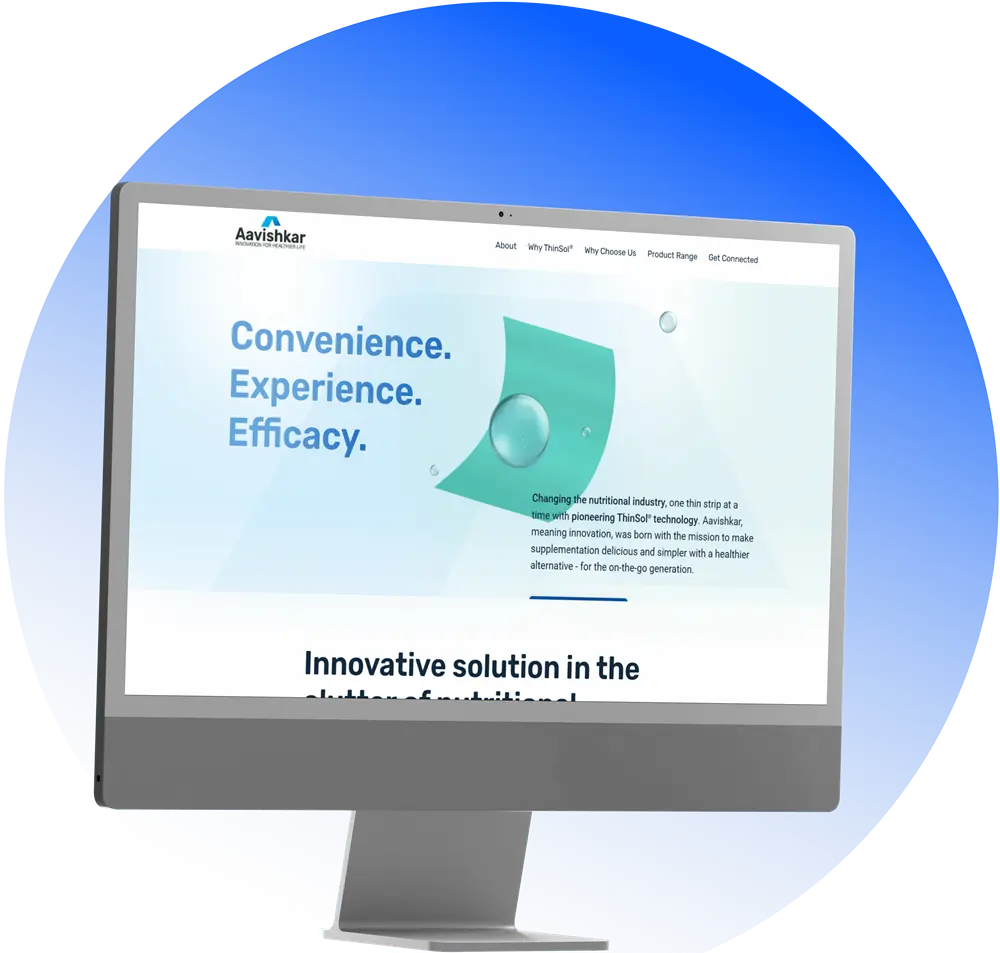
200+
Qualified leads - from a standing start, no prior paid campaigns
90%
Growth in qualified traffic, Phase 1 to Phase 2
52–65%
CPL reduction, Phase 1 to Phase 2
About Aavishkar
Aavishkar is a global leader in oral strip manufacturing fast-dissolving oral delivery solutions for the nutraceutical, wellness, and pharmaceutical industries. It has a 220,000 sq. ft. manufacturing facility and annual capacity exceeding 2 billion strips. The company combines large-scale production with in-house R&D, serving brand owners and private-label partners worldwide.
Pain Points Faced by Aavishkar
-
No prior Google Ads presence. Zero historical data, zero audience signal, zero campaign learnings to build from.
-
Minimal visibility on the commercial keywords procurement managers and brand owners search before reaching out to a manufacturer.
-
A major industry event is approaching, with no paid acquisition channel in place to capture the pre-event spike in buyer search activity.
-
Aggressive, established global competitors already bidding on the same commercial terms. Aavishkar would be entering the auction with no track record against players who'd been running for years
-
Strong manufacturing and R&D credentials with no digital channel translating them into qualified inbound inquiries.
Website :
https://aavishkar.com/Business Type :
B2B Manufacturing
Offices :
Hyderabad, India
Ideal Customer Profile :
Regions: US
Buyer Persona: Healthcare and nutraceutical brand owners, pharmaceutical companies, private-label wellness brands, procurement managers, product development teams, distributors
Domains: Healthcare, Nutraceuticals, Pharmaceuticals, Wellness, Manufacturing
Our Observations & Challenges
- No existing landing pages built for paid traffic. Every click would have landed on the general website with no conversion path.
- No previous campaign data to inform keyword bids, audience targeting, or budget allocation.
- No prior signal on which international markets would actually convert, despite a global ICP.
- A hard external deadline (the industry event) that ruled out the slower, data-gathering ramp-up a cold-start account would normally get.
- Building product-level keyword and landing page infrastructure from scratch across multiple manufacturing categories. But no historical performance to guide initial structure
- Entering a competitive global auction against established manufacturers with years of campaign history and standing budgets, while Aavishkar's account had none.
- Compressing the typical learning-phase timeline to have qualified visibility in place before the event, rather than the usual multi-month build.
Our Strategy & Execution
Phase 1 - Foundation & Launch
- Built the account from zero: Product-level ad groups for private-label manufacturing, contract manufacturing, and category-specific search terms. Each mapped to a dedicated landing page.
- Launched with a broader keyword mix deliberately. It has no historical data yet to identify which exact terms would convert.
- Set up tracking and conversion measurement from day one to start generating the performance baseline.
Phase 2 - Optimization
- Used phase 1 data to shift from broad-match to exact-match, high-commercial-intent keywords. The change that drove the 90% jump in qualified traffic
- Reallocated budget toward the international markets phase 1 data showed were actually converting. The main lever behind the 52–65% CPL drop.
- Rebid aggressively for top-of-page visibility to land the brand in top ad positions ahead of the industry event
- Rewrote ad copy to lead with manufacturing scale, R&D capability, and private-label expertise.
What worked?
-
01
Launching with structure, not guesswork Product-level ad groups and dedicated landing pages from day one meant Phase 1 data was usable.
-
02
Exact-match keywords once data existed The single biggest driver of the Phase 1→2 traffic growth. Converting early broad-match learnings into qualified buyer traffic
-
03
Reallocating budget to proven markets
Once Phase 1 showed which regions converted, concentrating spend there is what moved CPL down 52–65%. -
04
Visibility-first bidding ahead of the event Secured top-3 positions on schedule despite having no prior account history.
What didn't work?
-
Broad-match keywords, while necessary in Phase 1 to gather initial signals with zero historical data, produced lower-quality traffic than the account could sustain. This confirming the shift to exact-match in Phase 2 was the right call.
-
Early generic ad copy underperformed once Phase 1 data showed. Buyers responded more to specific manufacturing credentials that were addressed in the Phase 2 rewrite.
End Result

Case Studies


Key Services : Branding, Website UI, Content Marketing, Messaging, Positioning, Wordpress Development, SEO, LinkedIn Growth, Outbound Marketing.

Key Services : Website UI, Content Marketing, Messaging, Positioning, Wordpress Development, SEO, LinkedIn Growth, Outbound Marketing

Key Services : Branding,Website UI, Content Marketing, Messaging, Positioning, Wordpress Development.